
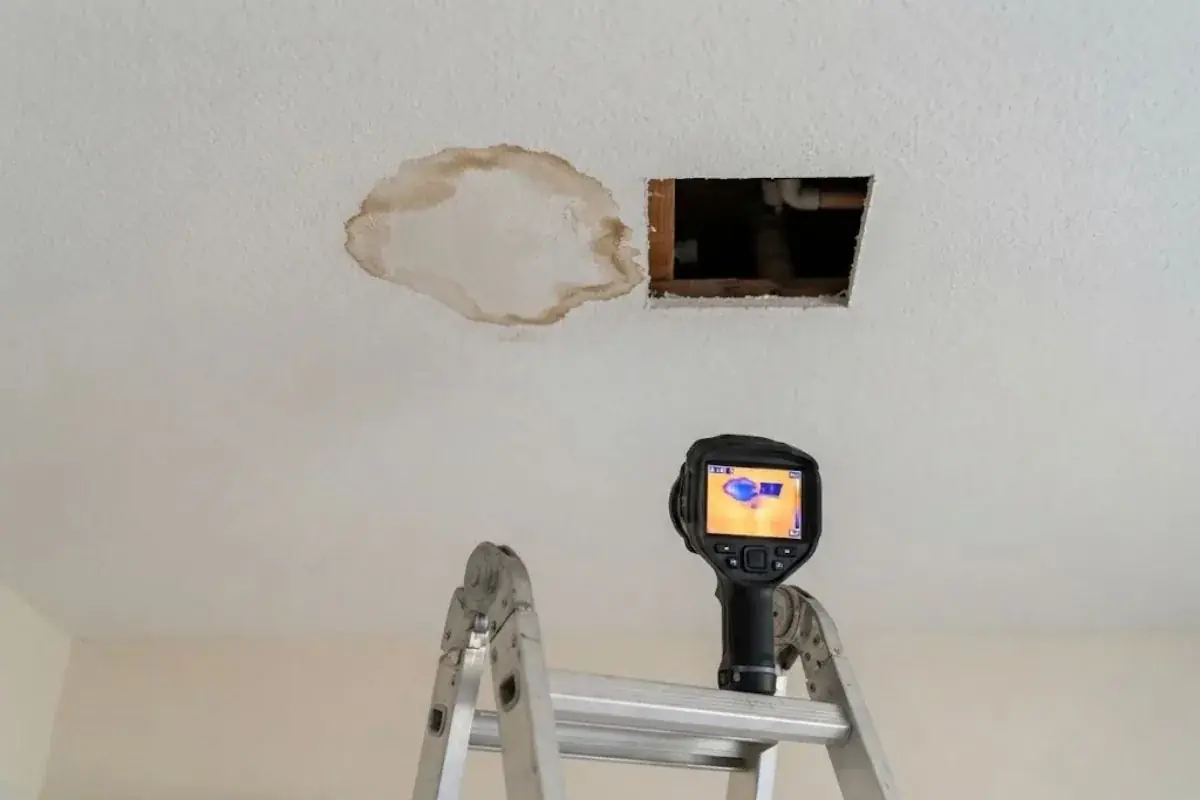
Finding the leak before anyone opens a wall
Leak detection is the process of locating where water escapes from a pipe you cannot see, using instruments instead of demolition. The 24/7 emergency line is open nights, weekends and holidays, because a pipe that is actively leaking does not wait for business hours. If you suspect one right now, close the main shutoff valve at the house, then call so a licensed plumber can be sent.
The usual signs are quiet at first. The water meter creeps even though nobody is home. A bill climbs for no clear reason. A section of floor feels warm underfoot, a ceiling stain grows a darker ring, or you hear a faint hiss behind a wall at 2 a.m. when the house is silent.
Each of those signs points to a different part of the system, and each calls for a different tool. A listening device works well on pressurized metal pipe. Thermal imaging shows hot water lines running through a slab. A pressure test tells us whether a section of pipe holds at all. The skill is picking the right method for what you describe, then confirming the answer with a second method before anything gets cut.
Meter still running or the water bill jumped
Hardin County Water District No. 1 publishes its own leak check, and it is the cheapest test you will ever run. It tells you whether water is leaking on your side of the meter at all.
Shut everything off
Close every faucet and stop every appliance, including the ice maker, the washer and the irrigation controller.
Read the meter
Lift the meter lid and write down the full reading, then look for the red leak indicator arrow.
Wait
Stay out of the water for 30 to 60 minutes, and do not flush a toilet.
Read it again
A changed reading, or a spinning red arrow, means water is moving somewhere past the meter.
Split the house
Close the main valve at the house and check again. If the meter stops, the leak is inside. If it keeps moving, the leak is in the buried line between the meter and the house.
That last step saves real time. It tells the plumber whether to bring listening gear indoors or a ground microphone for the yard. Share the result when you call.
What each symptom usually means
Use this as a starting map. The confirmation column is the part that matters, because a symptom alone never proves where the leak is.
| What you notice | Likely location | How it is confirmed |
|---|---|---|
| Meter moves with all fixtures off | Inside the house or the buried line | Main valve isolation test, then listening |
| Warm spot on a floor | Hot water line under the slab | Thermal imaging, then acoustic pinpoint |
| Ceiling stain that keeps growing | Supply or drain line above, or a roof leak | Moisture meter, then pressure test of the lines |
| Musty smell, soft subfloor | Drain or supply leak near a bathroom or kitchen | Moisture mapping and a fixture-by-fixture run test |
| Water heater runs often, no hot water use | Hot line leak downstream of the heater | Isolate the heater and pressure test the hot side |
| Soft or green patch in the yard | Buried service line | Ground microphone along the line |
| Pressure drops across the whole house | Service line or a failing regulator | Pressure gauge at a hose bib, then a line test |
The methods behind the findings
No single instrument finds every leak. These are the tools a plumber reaches for, and why:
- Acoustic listening: sensitive microphones on floors, walls or the ground pick up the hiss of pressurized water escaping, and the loudest point marks the spot.
- Thermal imaging: a heat camera shows a hot water leak as a warm bloom on a floor or wall, which helps most with lines under a slab.
- Pressure testing: the plumber caps a section of pipe, pumps it up and watches the gauge. A falling needle means a leak in that section.
- Moisture mapping: a meter pressed along drywall or subfloor outlines how far the water has spread, which also guides the repair.
- Tracer methods: a harmless gas or dye is introduced into a line that resists other tests, then detected where it escapes.
- Camera inspection: a small camera on a flexible cable looks inside drain lines, which is the right tool when the leak is wastewater, not supply.
Most visits combine two of these. One finds the area and the second narrows it to a patch small enough to open.
Slab leaks under the floor
A slab leak is a break in a water line that runs through or beneath the concrete floor. The signs are a warm spot on tile or carpet, a utility bill that rises without a reason, the sound of running water when everything is off, and sometimes a damp baseboard along an outside wall.
We confirm it in layers. The isolation test says the water is going somewhere. A thermal camera and a listening probe narrow it to a few square feet. A pressure test on the hot and cold sides separately tells us which line failed.
The repair has three routes. Break the slab at the leak and splice in new pipe. Abandon the failed line and run a new one overhead through the attic or walls. Or, if the pipe has failed in several spots, plan a repiping project. Spot repairs cost less up front, but a line that leaked once from corrosion may leak again.
Ceiling and wall leaks
A stain on a ceiling tells you where the water arrived, not where it started. Water follows framing, travels along a pipe and drips at the first low point. The leak can sit several feet away, and it might be a supply line, a drain, a tub overflow or even a roof problem.
We start with a moisture meter and the fixtures above. Run the shower, then the sink, then the toilet, one at a time, and watch for the stain to react. Often a small inspection opening in the drywall beats a large demolition. If the stain grows only during rain, the plumbing is probably innocent and a roofer is the right call. We will tell you that plainly.
Crawlspace and under-house leaks
Many Radcliff homes sit on crawlspaces, and those spaces hide leaks well. A wet patch of soil, insulation sagging off the floor above, or mold smell near the vents often traces to a supply joint or a drain fitting overhead.
A plumber can crawl the space with a moisture meter and a light, listen along the supply lines and look for drips on the underside of the subfloor. Tell the dispatcher if you have had standing water down there after heavy rain, since runoff and a plumbing leak look alike and need different fixes. Our sump pump service page covers the runoff side.
Buried lines, the yard and the meter box
The pipe from the meter to your house is buried, and when it leaks the water often surfaces far from the break. HCWD1 lists the usual clues: unusually lush grass over one strip, unexpected vegetation, and dark patches where fungus grows in constantly wet soil. A meter box that stays full of water after you have bailed it is another sign.
Locating the break means a ground microphone walked along the line, sometimes with a tracer to confirm the route. Plastic pipe is quieter than metal and can be harder to hear, so ask for a second method on those lines. Once found, the fix, including who is responsible for which part of the line, is covered under repair of the buried line. Ask HCWD1 where its responsibility ends before you spend money.
Irrigation, pools and spas
A sprinkler zone that never dries, a valve box full of water or a spray head that gushes at dawn points to an irrigation leak. Close the irrigation supply and recheck the meter. If the reading stops moving, the lawn system is the culprit.
Pools and spas lose water to evaporation, so a bucket test helps before anyone digs: mark the level inside and outside a bucket on the pool step and compare after a day. A larger drop inside the pool suggests a leak. Pool shell and equipment problems may need a pool specialist, and we will say so if that is where the loss is.
Where detection has limits
No method works on every pipe in every condition. Listening is weakest on plastic and on very small leaks. Thermal imaging needs a hot water leak and a temperature difference to see. Pressure tests tell you a section is failing but not exactly where. We would rather say "this narrows it to a six-foot stretch" than point at a spot with false confidence.
While you wait for the plumber
These steps limit damage and give the plumber a head start:
- Close the main shutoff valve at the house, and open the lowest faucet to drain pressure.
- Move rugs, boxes and electronics away from any wet area.
- Photograph the stain, the meter reading and the date, before you touch anything.
- Turn off the water heater's power or gas control if the leak is on the hot side and the heater is near water.
- Write down where you hear the sound, which rooms feel warm, and when the bill began to rise.
- Tell the dispatcher whether you rent, own, or manage the property.
What moves the price of a leak visit
A clear price is given before work starts. These are the factors that decide it, and none of them can be known over the phone:
A line in an open crawlspace is quick to reach. One under a finished slab or a paved driveway takes more time and more repair work.
A single listening pass is shorter than a combined survey with thermal imaging, a pressure test and a camera run.
Copper, PEX and galvanized steel each fail differently. Older corroded pipe sometimes calls for a larger repair than the leak alone suggests.
Opening drywall, tile or concrete adds labor. Patching and painting after the repair is a separate scope.
A planned same-day appointment, when available, differs from a night call where the plumber arrives to active flooding.
Insurance and what to document
Most homeowner policies cover sudden burst or accidental discharge, but not slow wear or long-term seepage. Your insurer decides, so ask before repairs where you can. Help your claim by keeping this record:
- Dated photos of the damage, the source if visible, and the meter reading.
- The plumber's written finding of where and why the leak occurred.
- Receipts for any emergency repairs, drying or hotel stays.
- A list of damaged belongings with approximate age and purchase details.
- The date and time you first noticed the problem and the steps you took.
Asking the water district about your bill
HCWD1 has a leak adjustment process. It needs the cause of the extra usage past the meter to be found first, and then a qualifying leak may receive an adjusted rate on the non-leak usage. Sewer charges may also be adjusted if the leaked water never entered the sewer. The details live in the district's tariff, so call HCWD1 before you repair and ask what paperwork it wants.
The plumber's written finding is the document that matters most. Keep it, along with photos of the repaired pipe. For a sense of how much a running fixture can waste: HCWD1 says a toilet that runs can lose up to 4,000 gallons a day and a dripping faucet up to 5,000 gallons a month. Fixing small leaks early keeps those totals off your bill.
Towns we reach for leak calls
The same listening and thermal gear travels to neighboring communities. If you live west of the city, see our page on emergency plumber service in Vine Grove. For Elizabethtown, the county seat to the south, there is a matching page for Elizabethtown with its own utility notes.