
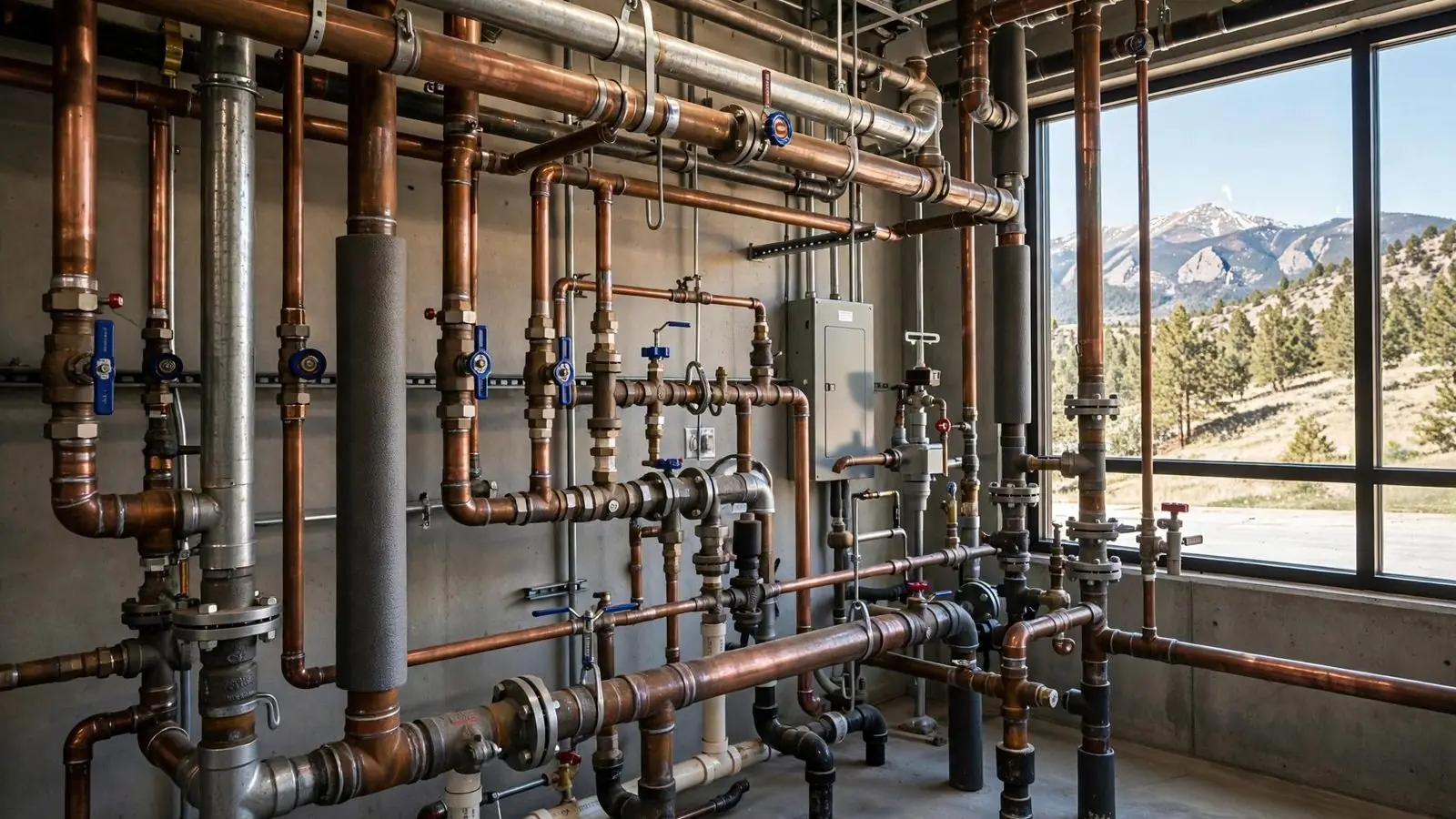
Business plumbing emergency after closing
When a pipe fails after closing time, the 24/7 line is the number to use, and it is answered on nights, weekends and holidays. Close the main shutoff first if water is spreading, then walk the plumber in by phone: where the valve is, where the water is coming from and who has the keys.
Commercial plumbing is the same craft as residential, applied to larger buildings. The difference is scale: bigger pipe, more fixtures on one line, floor drains, grease interceptors, backflow devices and tenants who depend on the building being open.
Emergency checklist for the owner or manager
A few minutes spent on these shortens the visit.
- Shut the water at the main or at the nearest isolation valve. Mark the valve so staff can find it next time.
- Turn off power to equipment standing in water, but only from a dry spot. If you are unsure, leave it and call the utility.
- Move stock, files and electronics off the floor and away from the affected area.
- Tell the dispatcher who will meet the plumber and how access works after hours, including alarm codes and key holders.
- Photograph the damage, the valve and the fixture involved for your insurer.
Who this service is for
The dispatch line takes calls from anyone responsible for a building.
- Restaurants and food service, where grease lines and floor drains are daily concerns.
- Retail shops and offices on US 31W (Dixie Boulevard) and Lincoln Trail Boulevard.
- Landlords and managers of rental houses, duplexes and apartment buildings.
- Churches, clinics, schools and small institutions with restrooms and kitchens.
- Owners of buildings with a tenant at the door and a leak behind the wall.
Building type and the problems that show up
The same pipe does not fail the same way in every building.
| Building | Common problem | First step |
|---|---|---|
| Restaurant | Slow kitchen drain, grease backup | Stop pouring grease, call |
| Retail store | Restroom clog, supply leak | Close the stop valve, keep public out |
| Office | Toilet overflow, ceiling drip | Shut the main, protect equipment |
| Rental house or apartment | Tenant leak, repeat clogs | Shut off at the unit, notify manager |
| Clinic or school | Restroom out of service | Isolate fixtures, call for same-day help |
| Strip center | Shared sewer backup | Stop water use in all units |
Leaks and drain problems in commercial buildings
A restroom group backing up all at once usually points to the building's main drain, not three separate fixtures. The plumber clears it with a larger cable or a hydro-jet, then runs a camera to see whether roots, grease or a broken section caused it. The main line itself is covered under cleaning the sewer line.
Floor drains that overflow can mean a clogged branch line or a pit with a lift pump that has stopped. A pump failing under load is also an emergency, even at 2 a.m. Describe what you see so the right tools come.
Finding a leak you cannot see
A water bill that climbs while the business is closed points to a hidden leak. Shut off every fixture, read the meter, wait and read it again, which is the same test the Hardin County Water District No. 1 describes for homes. If the number changes, the water is going somewhere.
Commercial leak tracing takes more care because pipe runs are longer and often covered by ceilings or slab. We offer it when the cause is unclear, and the plumber explains what can be found without opening walls. The leak tracing page describes the tools.
Grease traps and kitchen drains
A grease trap or interceptor catches fat before it enters the sewer. When it is full, the kitchen drain slows and smells, and eventually backs up. How often it needs service depends on the kitchen's volume, and local rules vary, so ask the local authority what applies to your business.
A plumber can inspect the trap, clear the lines downstream and check for a blockage that cleaning alone will not fix. Tell the dispatcher what kind of trap you have and where it is. Pouring hot water down a grease-clogged line only moves the problem further along. Routine cable and jet work keeps it from reaching that point.
Backflow testing: planned, and utility-driven
A backflow preventer keeps water that has left your building from flowing back into the public supply. These devices sit on irrigation lines, fire lines, boilers and some commercial kitchens. Testing is typically done by a certified tester on a schedule the water utility sets.
Ask the water utility what it requires for your address. HCWD1 supplies Radcliff and Vine Grove, and other districts supply other parts of the county. A failed test or a missed deadline creates trouble with the utility, so schedule testing ahead of the due date.
What shapes the price of commercial work
You get a clear price before work starts. These are the factors.
A call at midnight is not scheduled the way a daytime visit is. The timing is part of the conversation up front.
Larger pipe, ceiling access and long runs take more time and equipment.
Grease, roots and foreign objects need different tools, and a damaged pipe needs repair.
A shop that cannot close may prefer a same-day appointment when available.
Business policies often cover sudden water damage but not gradual wear. Document everything and ask your carrier early.
Property managers and Radcliff's rental market
Radcliff sits beside Fort Knox, so rentals turn over often. Managers can use the dispatch line as a single point of contact for several properties, giving the unit address, the tenant's contact and who authorizes the work.
For houses and units in Vine Grove and elsewhere in the county, say so on the call. If a tenant improvement needs new fixtures, see new fixture and line installs.