
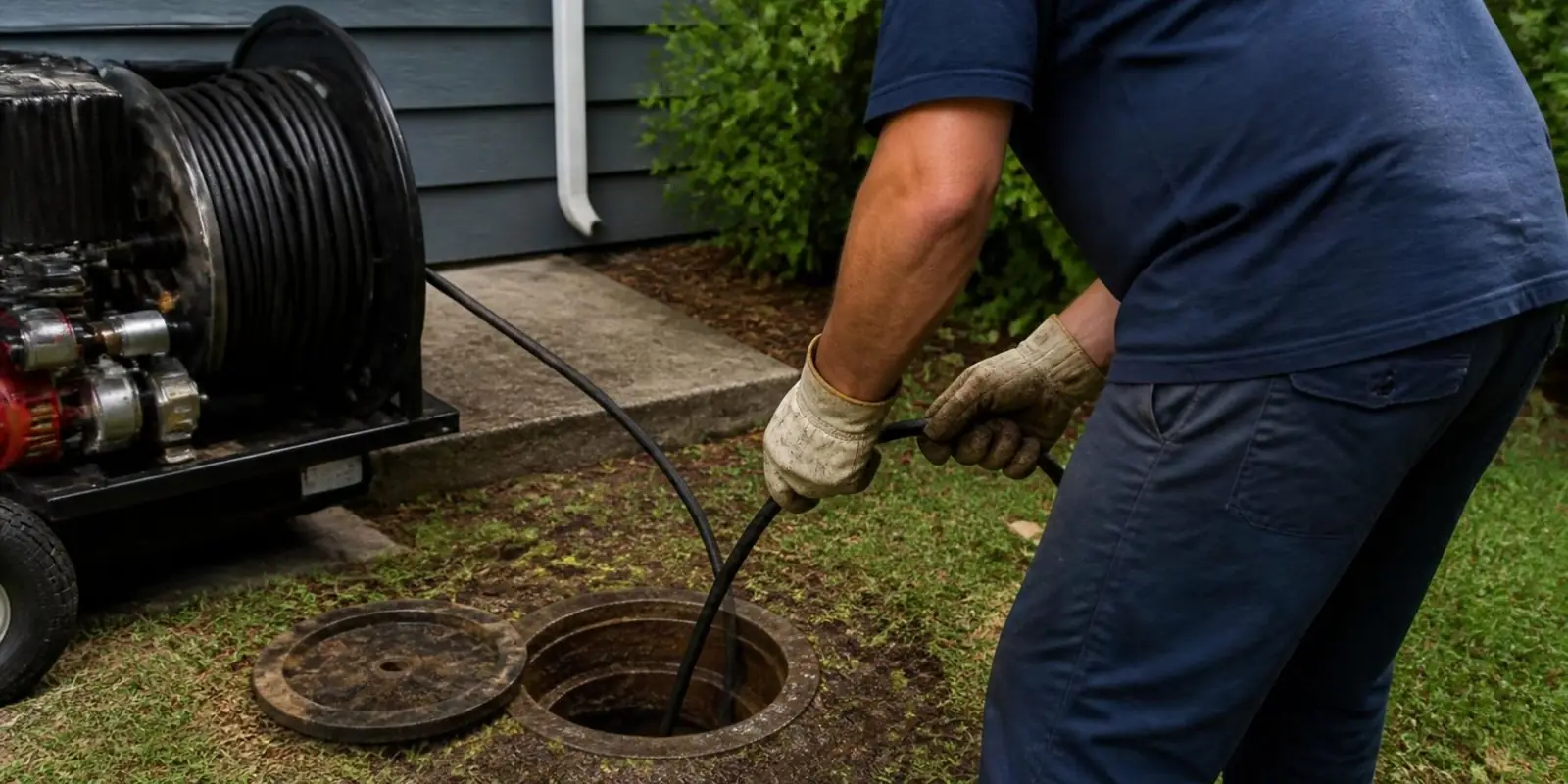
Sewer backup: what to do first
A sewer backup is an emergency because the water has no other place to go. The 24/7 line takes these calls through nights, weekends and holidays, and the first instruction is the same every time: stop putting water down any drain in the house.
Every sink, tub, shower, washer and toilet feeds the same main line. Once that line is blocked, each flush or load of laundry adds to what is already rising. In an emergency like this, wait for the plumber before using any fixture, even if the water seems to be dropping, because a partial blockage can close again.
Why the lowest drain overflows first
Wastewater behaves like any other liquid. When the main line is blocked, it backs up until it finds the lowest opening, which is usually a basement floor drain, a tub or shower on the lowest level, or a laundry standpipe. Fixtures on upper floors may drain slowly but stay dry.
That pattern is itself a diagnostic. If only the lowest drain is overflowing and upstairs sinks run normally, the blockage is in the main line past the point where the branches join. If every fixture in the house is slow, the problem may be farther along. In both cases the plumber looks for the cleanout, a capped pipe fitting on the main line that allows a cable or camera to enter.
Before the plumber arrives
These steps limit damage and keep everyone safe.
- Stop all water use and ask everyone in the house to do the same.
- Do not keep plunging a tub or toilet that is backing up. Plunging a line that is blocked downstream pushes sewage back out.
- Stay out of a flooded basement if any outlet, cord or appliance is in the water, and tell the dispatcher about it.
- Keep children, pets and bare feet away from sewage. It carries bacteria.
- Lift valuables and boxes off the floor, and photograph the water and damage for your insurer before you clean.
How a main line is found, opened and checked
Cleaning the main line is a short, ordered job when the cleanout is easy to reach, even in an emergency.
Locate the cleanout
It is a capped pipe at ground level near the house, or in a basement or crawl space, and the plumber confirms it before opening it.
Cable the blockage
A heavy cable with a cutting head works from the cleanout toward the blockage and breaks it up.
Flush and test
Water is run to confirm the line drains, and the plumber watches for backflow at the lowest fixture.
Camera if the cause is unclear
A camera shows whether the blockage was grease, a foreign object, roots or a damaged pipe.
Recommend next steps
A jet may follow for heavy buildup, or repair if the pipe itself failed.
What you see and what it points to
This is a rough guide for describing the problem to the dispatcher.
| What you see | What it points to | What to do |
|---|---|---|
| Water in the basement floor drain | Blocked main line, lowest opening | Stop water use and call |
| Toilet gurgles when the washer drains | Partial blockage in the main | Stop the laundry, then call |
| Tub fills with gray water when the toilet flushes | Main line blocked below the tub | Treat it as a backup |
| One slow sink, others fine | Local clog, not the main | See drain clearing for that fixture |
| Sewage smell outside near a cleanout cap | Pressure or blockage in the line | Keep the cap closed, call |
| Wet yard and soft ground over the line | Possible broken pipe | Mention it to the dispatcher |
A single slow fixture is a smaller job, handled on the drain cleaning side.
City sewer or septic: tell the dispatcher on the first call
HCWD1 operates the Radcliff sewer system, but some properties around the county use septic tanks instead. The plumber who is sent and the equipment on the truck depend on which one you have.
If you do not know, say so. Look for a monthly sewer charge on your water bill, or ask HCWD1 about your address. A house on city sewer with a blocked main is cleared through its cleanout. A septic property with a backup raises different questions, such as tank access and the drain field.
Who owns which part of the line
A sewer line has two parts. The private line runs from the house to the point where it joins the district main, and the main is run by the utility. Where that point sits varies from property to property, so ask HCWD1 where its line ends for your address.
A camera answers a related question. If the blockage or damage shows up on your side of the junction, the repair is yours. If the footage shows the trouble beyond it, you have evidence to bring to HCWD1. Sewer bills follow water use in Radcliff, and the district has its own process for requests after a leak or backup, so contact it directly rather than guess.
If the footage shows a cracked or collapsed pipe, read about repair of the sewer pipe because cleaning cannot fix that.
Storm drains and yard drains are a different system
Radcliff drains into 86 known sinkholes. That runoff system is separate from the sanitary sewer in your house. Water backing up in a yard drain or low spot after a heavy rain is a drainage problem, not a sewage backup.
A yard drain packed with leaves, soil or roots can be cleared with a cable or a jet, and the plumber will tell you if the problem is a grade or a drainage design issue instead. Never dump anything into a sinkhole or storm inlet. The Kentucky Geological Survey warns against using sinkholes as dumps since local water supplies come largely from springs.
What shapes the cost of a main line cleaning
The price is stated before the plumber starts. Here is what moves it.
A clear outdoor cleanout is the simplest case. With no cleanout, the plumber may have to remove a toilet or open another access point.
A soft plug near the house is quicker than a long run packed with roots or debris.
Heavy buildup may call for a jet after the cable, which adds equipment and time.
Footage after the clearing shows the pipe condition and costs extra, but it is how repeat backups get explained.
A same-day appointment follows the regular schedule. Calls after hours are dispatched as emergency visits, and the quote reflects that.
Insurance varies. Many homeowner policies cover sudden water damage from a backup only with an added endorsement, so check yours or ask your insurer. Photograph everything and keep damaged items until the adjuster has seen them.