
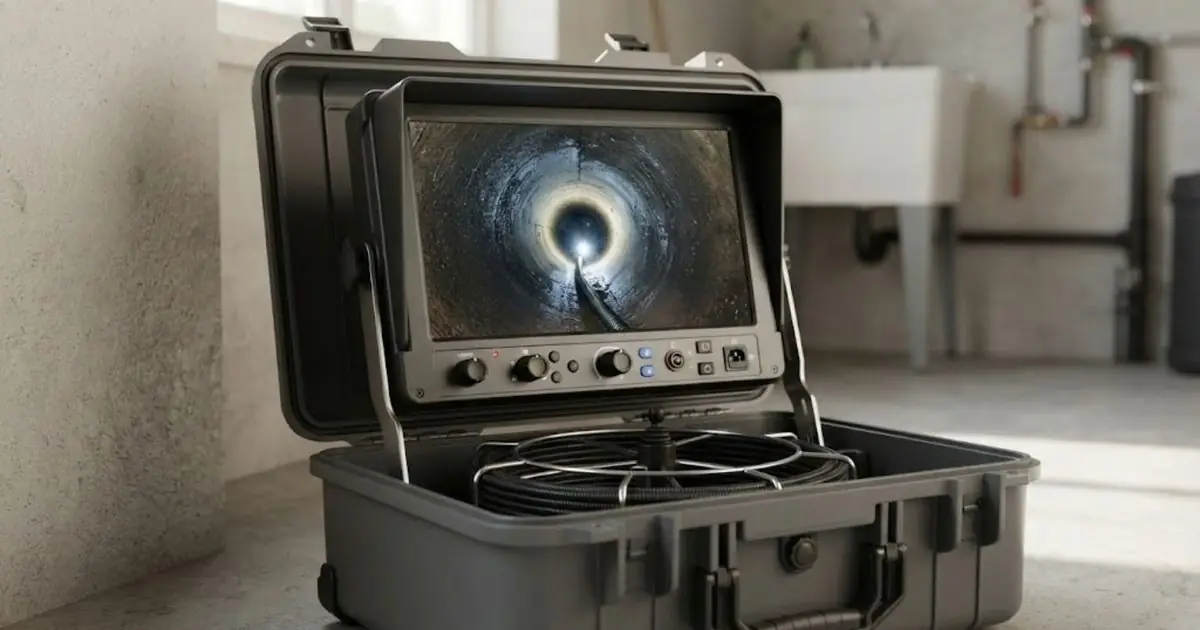
What a sewer camera inspection is, and what it answers
A sewer camera inspection, sometimes called a sewer scope, sends a small waterproof camera through the line from your house to the district main. The plumber watches live video and records the run. It answers a simple question that no amount of guessing can: is the pipe sound, or is something wrong inside it?
It is a planned visit. If sewage is backing up into the house today, that goes through the 24/7 line and gets cleared first, and the camera follows once the water is moving again.
What the camera shows
A trained operator reads the footage for these conditions.
- Offsets, where two pipe sections no longer line up at a joint
- A belly or sag, a low spot where water and waste sit instead of flowing
- Roots that have entered through a joint or crack
- Cracks, breaks and missing pipe segments
- Scale, rust flaking or grease coating on the walls
- The pipe material, such as cast iron, clay or plastic, and where it changes
Some conditions look worse than they are, and some look mild but need attention. The plumber explains what each finding means for your line, rather than just showing the screen.
How locating works
The camera head carries a small transmitter. A handheld receiver above ground picks up its signal, so the plumber can mark the surface at the point where the camera sits. That gives the depth and the position of any defect, which matters if the work calls for digging. It also helps find the cleanout, trace which way the line runs under a slab or a yard and learn whether it crosses the property line.
Locating prevents guessing. A repair crew that knows a crack sits at a specific spot can open a small trench there rather than a long one.
When a scope is worth it
Three situations stand out. The first is buying a house, especially an older one. Radcliff sits next to Fort Knox, and with military moves, homes change hands often. A buyer in a hurry may skip the sewer line, and a defect there can be expensive to find after closing.
The second is repeated backups. When a drain has been cleared more than once, a camera shows whether something in the pipe keeps catching debris. The third is before a major remodel, such as adding a bathroom or finishing a basement, so you learn whether the line can take the extra load.
Finding, meaning and next step
This table shows how common findings translate into decisions.
| Finding on camera | What it means | Likely next step |
|---|---|---|
| Clean, round pipe with smooth joints | Line is in good condition | No action, note for the record |
| Grease or scale coating the wall | Buildup narrows the pipe | Cleaning, often by jetting |
| Roots at a joint | Water is entering the pipe | Clear the roots, then plan a repair |
| Belly or sag holding water | Pipe has settled | Monitor or repair, depending on depth |
| Cracked or offset section | Pipe has failed locally | Spot repair or lining |
| Collapsed pipe | Flow is blocked or nearly so | Excavation and replacement |
How the visit goes
The process is short when the line is easy to reach.
Tell the dispatcher what you know
Give the age of the house, any backup history and whether you use city sewer or septic.
Open the cleanout
The plumber removes the cap or uses a toilet pull if no cleanout exists.
Run the camera
The camera travels toward the main while video is recorded and the operator notes distance and findings.
Locate and mark
Any defect is marked above ground so depth and position are known.
Review the footage
You get the video and a plain-language explanation of what it shows and what, if anything, to do.
What a camera cannot see
A camera sees only the pipe it can travel through. A fully collapsed section stops it, standing water can hide a belly, and a very small hairline crack may not show on video. It does not see the condition of the vent system or the pipes inside walls, and it cannot tell you what a repair will cost until the work is scoped. Treat the footage as strong evidence, not a full picture of every inch.
Where the district line begins
HCWD1 operates the sewer system in Radcliff. Your private line runs from the house to the point where it joins the district main, and that point is different from property to property. Ask HCWD1 where its line ends for your address, then ask the plumber to note on the footage where that point falls.
A buyer can use that information in negotiations. A seller can use it to show the line was checked. If a problem turns up in the private part, repair options for a damaged sewer pipe range from a small patch to a replacement, and a backed-up main is handled under cleaning the main sewer line.
What affects the cost of an inspection
The price is given before the visit. These factors change it.
A clear cleanout makes the run quick. If the plumber has to pull a toilet, it takes longer.
A short straight run is simple. A long line with several bends takes more time.
Marking the surface above a defect adds a step, and it is usually worth it when digging may follow.
If grease or debris blocks the view, the line may need clearing before the camera can see the wall.
Same-day appointments are offered when available. A buyer working toward a closing date should say so on the call.