
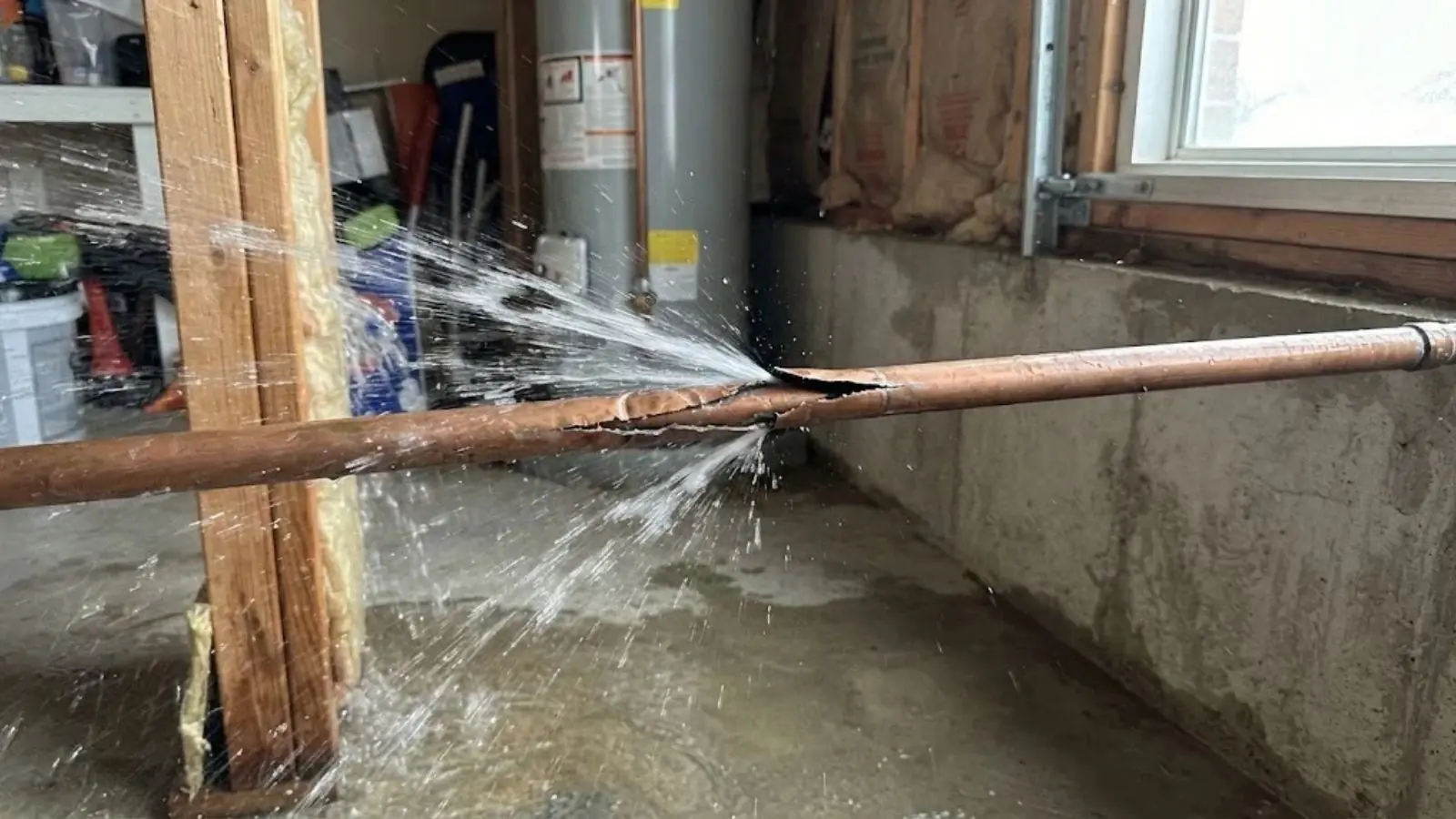
Burst pipe right now: what to do first
A burst pipe is a split or break in a water line that lets pressurized water pour into a wall, ceiling, floor or crawlspace. The 24/7 emergency line takes these calls nights, weekends and holidays, and the first minutes before the plumber arrives matter more than anything we do later.
Find the main shutoff valve and turn it fully closed. Then open the lowest faucet in the house to drain what is left in the pipes. If water is near outlets, an appliance or the electrical panel, keep clear of it and call 911 or your electric utility if you see sparks, smell burning or cannot reach the panel on dry ground.
Call the line next, with the room, the pipe type if you know it, and whether the water has stopped. Everything after this is repair.
Steps while the water is off
Once the main is closed, these keep the damage from spreading:
- Photograph the broken pipe and every wet surface before you move anything.
- Lift rugs, electronics and cardboard boxes out of the wet area, and set towels along the edge of the flood.
- Turn off the water heater's power or gas control if its tank has drained, since a heater that runs dry can be damaged.
- Leave the heat on if it is cold, so nearby pipes do not freeze while you wait.
- Note where the main valve is and whether it closed all the way. A valve that will not shut is something to tell the dispatcher at once.
- Do not touch the water meter or its box. It belongs to Hardin County Water District No. 1, so ask HCWD1 before anyone works on it.
How we find the failed section
Sometimes the break is obvious, a spray from a joint under the sink. Often it is not. Water travels along framing and pools far from the split, so the plumber works backward from the wet spot.
A moisture meter outlines the soaked area. A listening device on the wall picks up the sound of escaping water once the pressure is back on briefly. A pressure test on the isolated line confirms which stretch is losing water. If the crack is hairline and the room is already dry, a hidden-leak survey may be the better first step.
Once the section is found, the plumber cuts out the damaged piece and installs new pipe with proper fittings, then restores pressure slowly and checks every joint for seepage.
Frozen pipes and what they hide
Water expands when it freezes, and that pressure is what splits a pipe. The split usually shows up as a small crack, and the real flood starts when the ice melts and flow resumes. A pipe that froze once may have more than one crack along its length.
If a faucet stops running in cold weather, the line is probably frozen. Open that tap, keep the heat on, and warm the pipe gently with a hair dryer or warm towels. Never use an open flame, a propane torch or a heat gun, since all of them can ignite framing or scorch plastic. If you see a bulge, frost on the pipe, or water as the ice melts, close the main immediately and call.
Ask for the whole line to be checked after any freeze. A repair at the visible split can leave a second crack in a wall, and that one lets go later.
Ice storms and power outages in Hardin County
The National Weather Service event records in the regional hazard mitigation plan list ice storms in the Hardin zone in November 2018 and February 2021, plus winter storms in both years. The same plan includes a photo of a downed power line in Radcliff from the 2018 storm.
The link to plumbing is the outage. A home without power or with a dead furnace blower cools fast, and a crawlspace or an exterior wall cools faster. If your power goes out in a hard freeze, open a few faucets to a slow drip, let cabinet doors stand open near sink supplies, and walk the house for damp spots when power returns. Thawing is when many pipes show their splits.
Pipe material and how each one fails
The repair depends on what the pipe is made of. This is the general pattern across homes of different ages:
| Material | How it usually fails | Typical repair |
|---|---|---|
| Copper | Freeze splits, pinhole corrosion, loose soldered joints | Cut out the section, install new copper or a compatible coupling |
| PEX | Splits in freezing, damage at fittings, rodent chewing | Replace the damaged run, new crimp or expansion fittings |
| CPVC | Cracks with age and heat, brittle at joints | Replace the section, often several nearby joints |
| Galvanized steel | Rust from the inside, low pressure, repeated leaks | Spot fix as a stopgap, then consider repiping |
| Polyethylene (buried) | Splits from ground movement or freeze at shallow depth | Replace the damaged length, see our water line page |
If the same house keeps producing leaks in different places, that pattern matters more than any single repair.
Supply valves, cracked drains and pinhole leaks
Not every burst starts in a wall. A broken supply valve under a sink or behind a toilet can spray until the main is closed, and it is a common cause of calls. Replacement is a short job once the water is off, and the new valve gives you a local shutoff next time.
Cracked drain pipes behave differently. They leak when water is flowing down them, so the damage appears during a shower or after a flush. Pinholes in copper show as a fine spray or green crust, a sign the whole pipe wall is thinning, and the hole is only where it gave out first. Fixture-side connections you can see are covered under faucet and sink work.
Plumbing repair versus water damage cleanup
Our scope is stopping the water and fixing the pipe. That means finding the break, shutting off the line, repairing or replacing the pipe, and testing it under pressure.
Drying out wet drywall, pulling soaked insulation, treating mold and rebuilding finishes belong to restoration and repair contractors. You will likely need one if water ran for long. Ask your insurer which contractors it works with, and keep the plumber's written finding on file, because it shows when and why the pipe failed.
What moves the price of a burst pipe repair
You get a clear price before work starts. These are the factors that shape it:
A split under an open sink takes little time. A pipe inside a finished wall, ceiling or slab needs opening, and often patching afterward.
Copper joints, PEX fittings and CPVC solvent welds each need different parts and different labor. Old galvanized can break further when disturbed.
A single split is quick. A frozen run with several cracks may be cheaper to replace than to patch.
Late-night and holiday calls involve an after-hours dispatch. A daytime same-day appointment, when available, is a lighter lift.
If the main shutoff valve is stuck or leaking, replacing it adds a step but makes the next emergency easier.
Insurance, renters and landlords
Most homeowner policies cover sudden burst or accidental discharge, but not slow leaks or wear. Ask your insurer before you start repairs where you can, photograph everything, and keep receipts. Our page on finding hidden leaks lists the documents that help a claim.
Renters should call the landlord or property manager right after closing the shutoff, because the lease usually decides who arranges the repair. Landlords and managers can call us directly and tell the dispatcher about the building and how access will work.
Where we serve
Calls come from Radcliff and the nearby Hardin County towns. West of the city, Vine Grove is served by the same line, and the same crews reach Elizabethtown to the south.