
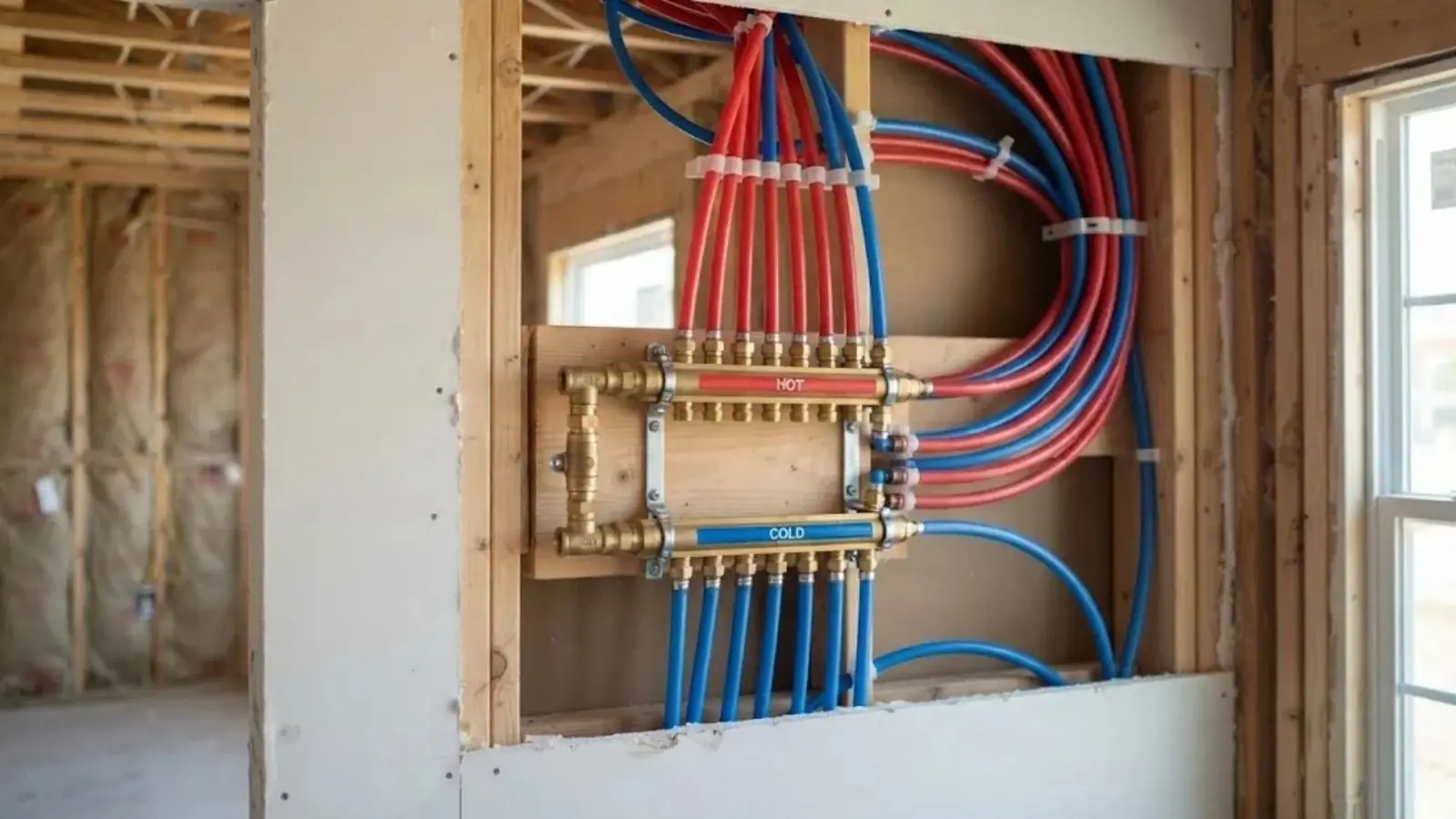
Signs the pipes themselves are the problem
A single leak is a repair. A pattern of leaks, rust-colored water and falling pressure often means the pipe has aged out, which is when repiping becomes worth pricing.
Repiping is the replacement of a home's water supply lines, and sometimes its drain lines, with new pipe. It is planned work, so these are the signs that bring people to this page.
- Brown or orange water from the hot tap, the cold tap or both, especially after the water has been off for a while.
- Pressure that has dropped across the house and does not improve after cleaning aerators or showerheads.
- Pinhole leaks or green and white crust on pipes, and a second leak showing up soon after the first was fixed.
- Water that takes a long time to run hot because the supply pipe is partly blocked.
- A slow drain on several floors that clearing does not cure, in a home with old cast iron drain lines.
If you have a leak you can see right now, start with burst pipe repair. This page is for the larger decision about the pipe run.
How a plumber decides it is the pipe and not something else
Low pressure can come from a stuck pressure regulator, a partly closed valve, a clogged cartridge or the water supply. Rusty water can come from the water heater tank. So the visit begins with elimination. The plumber tests static pressure with a gauge on an outdoor spigot, flows each fixture, and checks the heater.
Next comes a look at exposed pipe in the basement, crawl space or utility closet. A magnet or a scratch test helps tell galvanized steel from copper. Cutting a small section of pipe shows how much of the inside is narrowed by scale. If one section is bad and the rest is clean, you may need less than you feared.
Pipe materials you may find in a Radcliff house
Radcliff was incorporated in 1956 and passed 21,000 residents by 1990, so homes here come from several building eras. A plumber confirms what is in your walls by looking. This table covers what each material is known for.
| Material | Known for | Watch for |
|---|---|---|
| Galvanized steel | Common in older homes | Rust inside, narrowing, low pressure |
| Copper | Long service life | Pinholes in some water, failed solder joints |
| CPVC | Rigid plastic, hot and cold use | Brittle fittings with age and heat |
| PEX | Flexible, fewer joints | Needs proper support, not for sunlight |
| Polybutylene | Gray plastic, used in some past decades | Known problem pipe, usually replaced |
| Cast iron (drains) | Heavy drain pipe in older homes | Rough interior, cracking, rust at joints |
Hard water and old galvanized pipe
Hardin County Water District No. 1 says its water is hard because the spring source passes through rock and rocky soil. It does not publish a hardness number in its annual report, so test your tap or ask HCWD1 for its latest water quality report.
What this means for pipe is simple. Minerals leave scale inside the line, and on old galvanized steel scale and rust together shrink the opening over decades. Newer materials resist that buildup better, though a water heater still needs flushing on a schedule.
How a repipe is staged
The order matters because the house is without full water for a limited time on the day pipes change over.
Inspect and plan
The plumber maps the run, picks the new material and marks where walls or floors must be opened.
Open access points
Small cuts in drywall, floors or ceilings let new pipe be pulled through or run beside the old.
Run new lines
New pipe goes in while the old lines still carry water, so the water stays on as long as possible.
Switch over and test
The water is shut off briefly, new lines connect to the main, and the system is pressure tested for leaks.
Close up
Drywall and paint repair is a separate trade and is scheduled after the pressure test passes.
Partial repipe or whole house
The right size of job depends on how much of the pipe has actually failed.
| Situation | Partial | Whole house |
|---|---|---|
| One bad run, rest in good shape | Fits | Usually more than needed |
| Repeated pinholes in several rooms | Delays the next leak | Often the better path |
| Rusty water from every tap | Rarely cures it | Likely needed |
| Selling or buying with galvanized lines | Case by case | Often requested by buyers |
| Remodel opening up walls anyway | Good time for one section | Cheapest time to do all |
Cast iron drains and what is different
Drain lines age differently. Cast iron rusts from the inside, and its rough surface catches grease and paper. A sewer camera shows pitting, cracked joints and sags. Sometimes a short section is replaced with modern drain pipe, and sometimes the whole stack goes.
If a drain keeps backing up, the cause is not always the pipe. Ask for the line to be cleared first, then a camera look if it returns.
What moves the price of a repipe
The price is set after the inspection, and you hear it before work starts. These are the factors.
More bathrooms, kitchens and outdoor spigots mean more pipe and more connections.
Copper, PEX and CPVC differ in material cost and in how they go in. The plumber explains the trade-offs.
An open crawl space is faster than finished ceilings and tile walls.
That work is separate from the plumbing and may be done by another trade.
Permit rules vary, so ask the city building department what applies to your address. Inspection comes after the rough-in is done.
Check the meter before you commit
HCWD1 says to turn off every fixture and appliance, including the ice maker, read the meter, and read it again after 30 to 60 minutes. If the reading moved, water is escaping somewhere. A steady leak on a supply line may be solved by finding the leak and repairing one section, which can save you a whole repipe.
Service lines, remodels and neighboring towns
Everything described so far is inside the house. The buried line from the meter to the foundation is a separate question, covered under repairs to the buried water line. Remodels that add a bathroom or move a kitchen often mean new supply runs, which overlaps with new fixture and line installs.
Homes in Vine Grove are served by the same water district, so the hard water notes above apply there too.