
A stopped drain is a blockage you can locate
Drain cleaning is the removal of whatever is narrowing or plugging a drain pipe, so wastewater can leave the house at normal speed. If water is rising in a sink or tub right now, the 24/7 line is staffed through nights, weekends and holidays, and the dispatcher will tell you what to do while a plumber is on the way.
The cause gets found by watching how the house behaves. One slow sink points to a local clog in that fixture's trap or branch line. Several fixtures gurgling together point lower, toward the main drain. A cable with a cutting head clears the first kind. A camera on a flexible rod finds the second kind, because a pipe that is cracked, sagging or full of roots will clog again no matter how often it is cleared.
What to do right now, before the plumber arrives
These steps keep a bad clog from becoming a flooded floor, and they make the plumber's job easier.
- Stop running water. That means the dishwasher, the washing machine, showers and any flush that is not essential.
- Do not pour liquid drain opener into a sink that is already holding water. The chemical sits in the bowl, burns skin on contact and can splash back when a plumber starts working.
- Tell the dispatcher what you poured earlier, if anything. A plumber who knows there is chemical in the line wears the right protection.
- Move rugs, boxes and anything electrical away from a floor drain that is rising.
- If sewage is coming up in the lowest drain of the house, leave that room alone and keep children and pets out of it.
Kitchen sink clogs and what is usually in them
Kitchen drains clog differently from bathroom drains. Cooking grease cools inside the pipe and coats the wall, then rice, coffee grounds and eggshell fragments catch on that coating until the opening is the size of a pencil. A disposal grinds food finely but does not stop grease from solidifying downstream.
A cable that spins through the soft mass often restores flow in one pass. If the sink drains for a day and slows again, the grease was only punched through and the pipe wall is still coated. That is the situation where a jet is the better tool, and our page on jetting a greasy line explains how it strips the wall clean.
If a double sink drains one side and fills the other, the blockage sits after the point where the two drains join. A disposal that hums but does not turn is a separate repair, covered on the disposal repair page.
Which drain is failing tells you where the clog sits
Use this as a first read before the plumber arrives. It is a starting point, not a diagnosis.
| What you notice | Where the clog likely is | Usual next step |
|---|---|---|
| One sink or tub slow, everything else normal | Trap or branch line of that fixture | Cable that fixture |
| Kitchen sink slow after meals, gurgles | Grease buildup in the kitchen branch | Cable, then jet if it returns |
| Toilet gurgles when the shower drains | Shared line or main drain | Camera look at the main line |
| Tub or lowest floor drain bubbles when the washer runs | Main line partly blocked | Cleanout access and cable or jet |
| Sewage smell plus several slow drains | Main line or vent problem | Camera, then clearing or repair |
| Water backs up out of the lowest drain | Main line fully blocked | Treat as an emergency |
A backup in the lowest drain is an emergency because every fixture above it is still feeding water toward that opening. The main line has its own page, cleaning the sewer line.
Cable, jet or chemical: choosing the right tool
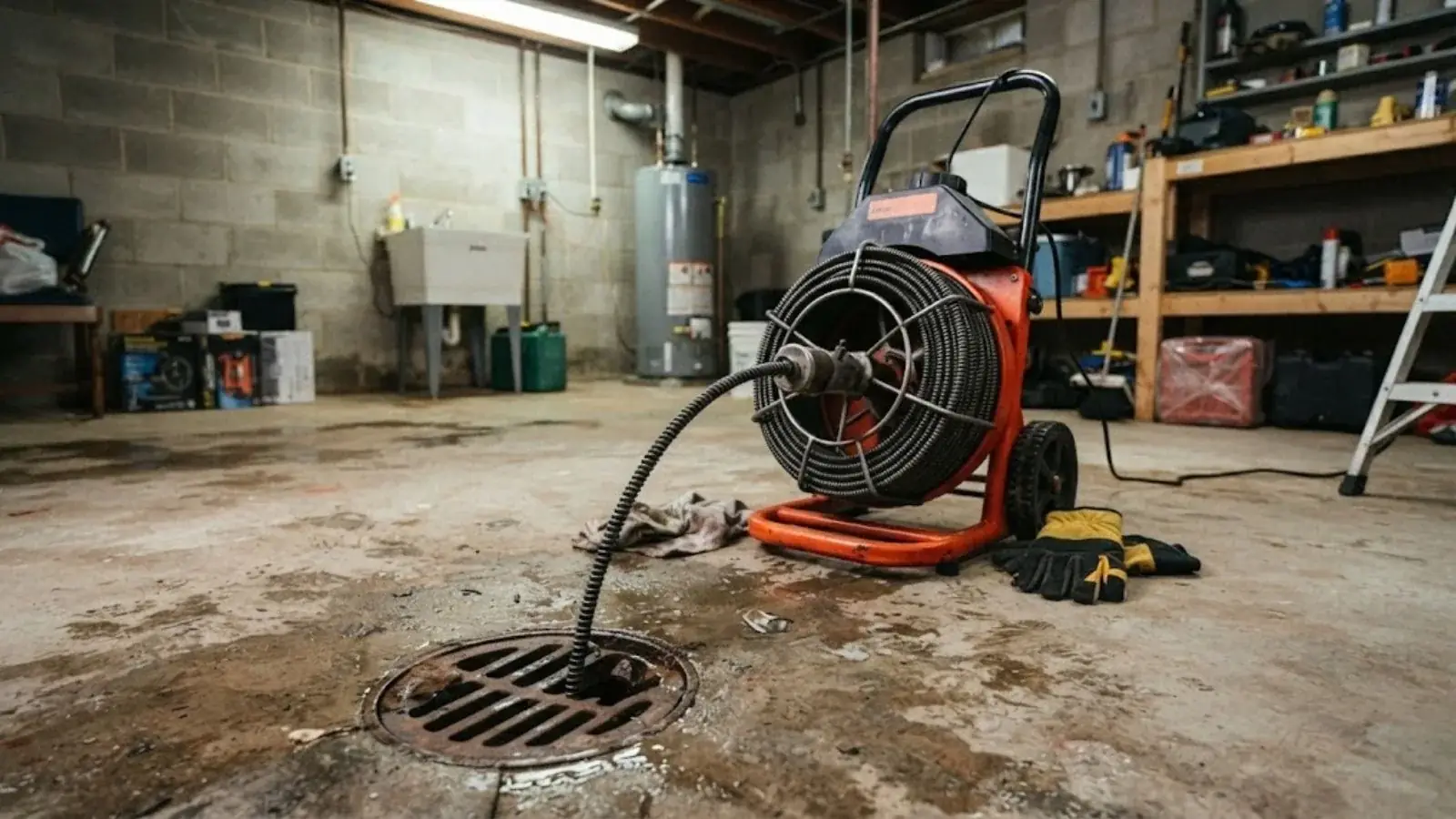
A drain cable, often called a snake, is a coiled steel line with a cutting or retrieving head. It is the right tool for a hair clog, a toy in a trap or a soft plug close to the fixture. It cuts a hole through the blockage, and that is also its limit. Debris that clings to the pipe wall stays behind.
A hydro jet sends high-pressure water out of a nozzle and scours the full circumference of the pipe. It costs more time and equipment, which is why plumbers reach for the cable first on a simple local clog.
Liquid chemicals are the weakest option. They work slowly, they do little to grease further down the line, and they leave the plumber to work around caustic standing water. A camera comes into play when the same drain has been cleared more than once, since it shows whether the pipe itself is the problem.
Shower and tub drains
Hair wrapped in soap scum is the usual culprit, and it often sits within a foot or two of the drain opening. A plastic hair-catching strip or a handheld retrieval tool pulls out a small clog. If water pools around your ankles after the first minute, the blockage is farther down and a cable is needed.
A slow drain that also leaves a damp spot on the ceiling or wall below may involve a leaking drain line rather than a plain clog. Stop using that fixture, and tell the dispatcher. A leaking drain pipe is repaired differently from a blocked one, and cleaning it with a heavy cable can make the leak worse.
Why older Radcliff homes and military moves matter here
Radcliff grew up around Fort Knox, and many homes are decades old. Older drain lines tend to have rougher interior walls, joints that have shifted and sections that sag, all of which hold debris. When a clog keeps returning in a house of that age, a camera is worth the extra step.
Because HCWD1 operates the Radcliff sewer system and sewer bills follow how much water you use, a house that sits unused between tenants still has plumbing to think about. In a vacant home the water in a trap can evaporate over a long absence, which lets sewer gas into the room. Running every fixture briefly when you move in refills the traps. If the smell stays after that, ask for a drain check.
Hard water is a separate factor. HCWD1 describes its water as hard because of the rock and soil it passes through, and mineral scale can build on pipe walls over time. That scale gives grease and hair a rough surface to grab.
What moves the cost of clearing a drain
The price is stated before any work starts. These are the things that change it.
A plug at one fixture is a shorter job than a blockage in the main drain. The farther the cable has to travel, the more time it takes.
A jet needs more equipment and setup than a cable, so it costs more. It is chosen when grease, scale or roots make a cable a short-term fix.
A clean outdoor cleanout port makes the work simple. If the plumber has to pull a toilet or work through a roof vent to reach the line, the job gets longer.
Adding a camera pass is a separate line on the quote. It is most useful when a drain has clogged more than once in a short time.
Same-day appointments and after-hours calls are scheduled differently, so the dispatcher gives you the price for your timing before anyone is sent.
On insurance, most homeowner policies cover sudden water damage from a backup only if the policy includes that coverage, and they often do not pay to clear the clog itself. Ask your insurer. Photograph any wet floors and damaged items before cleanup.
How the visit goes
Here is the usual sequence once a plumber is at the door.
Walk the fixtures
The plumber runs water at each fixture to see which ones drain, which gurgle and which back up.
Find the access point
A cleanout, a removed trap or a pulled toilet gives the cable or camera a way into the line.
Clear and confirm
The cable or jet clears the blockage, then water runs for a few minutes to prove the drain moves.
Look deeper if needed
If the clog was in a spot where debris should not collect, a camera shows the pipe condition before any repair is proposed.