
Why the heater stopped, and how it gets found
A water heater that quits is annoying, and one that leaks is urgent. The 24/7 line takes both kinds of calls overnight, on weekends and on holidays, and the plumber will ask which symptom you have before dispatching. Until help arrives, close the cold supply valve above the tank if you see water, and cut power or gas to the unit.
Water heater repair means finding the failed part, such as a heating element, thermostat, igniter, thermocouple or valve, and replacing it without swapping the whole tank. The diagnosis starts with a meter on the electrical side or a gas pressure and flame check, then a look at the supply and relief valve.
Symptom table: what the clue usually means
These are patterns, not promises. A plumber confirms with a meter and a visual check.
| What you notice | Likely cause | Repair or replace |
|---|---|---|
| No hot water at all, electric | Tripped breaker, failed element or thermostat | Repair |
| No hot water at all, gas | Pilot out, bad thermocouple or igniter, gas valve | Repair, unless old |
| Lukewarm water | One element out, thermostat set low, sediment | Repair |
| Rumbling or popping | Sediment layer boiling underneath | Flush, then reassess |
| Rotten egg smell in hot water | Bacteria reacting with the anode rod | Flush and anode service |
| Water at top of tank | Loose inlet or outlet fitting | Repair |
| Water at relief valve | High pressure or worn valve | Repair |
| Water at bottom of tank | Tank shell failure or drain valve | Usually replace |
A leak at the bottom of the tank often means the steel has rusted through. That calls for swapping in a new tank, and delaying it only adds flood risk.
If the wet spot is nowhere near the tank, the water may be coming from a line in the wall or slab, and a leak tracing visit with acoustic and thermal tools finds it without opening the floor at random.
Leaking tank: how urgent is it?
Match your leak to the step below to decide how fast to act.
Damp fitting, no pooling
Wipe it dry, check it again after a while and plan a same-day appointment when available.
Steady drip into the pan
Close the cold valve, turn off power or gas and call the 24/7 line.
Water spreading on the floor
Do the same shutoffs, then move belongings and stay out of standing water near outlets.
Hissing, steam or a hot discharge pipe
Stay back, keep people and pets away and call. Do not touch the relief valve.
Gas smell at any point
Leave the house, then call the gas utility or 911 from outside. Do not flip switches.
That last row matters most. A gas odor is never a repair question until the utility or fire department has cleared the building.
Electric, gas and heat pump: what fails on each
The parts differ by fuel type, so the dispatcher will ask which one you own.
Two heating elements and thermostats sit behind access panels on the tank. A burned element or a stuck thermostat gives no or lukewarm hot water, and a high-limit reset button can trip after a surge.
The thermocouple senses the pilot flame and the igniter lights the burner on newer models. A weak flame sensor or a dirty burner keeps the gas valve closed, and a sooty flame needs attention before use.
These add a compressor, a fan and air filters on top of the tank. A clogged filter, a condensate drain blockage or an error code can shut down the heat pump side while the backup elements keep working.
When a repair is smart and when it is not
A fair rule: fix cheap parts on a healthy tank, replace the tank when the shell is failing.
- A thermostat, element, igniter or pilot assembly on a heater under about 10 years old, usually worth fixing.
- A relief valve replaced because it dripped, usually worth fixing, if the pressure is normal.
- A drain valve leak, often worth fixing if the tank body is clean.
- A tank over 12 to 15 years old with multiple failures, usually time to replace.
- Rust at the base, water on the floor from the shell or a bulging jacket, replace.
- Repeated element burnouts on a very sediment-heavy tank, flush first and reconsider.
A plumber who says a repair is not worth it should explain why, and you should hear the price of both options before work starts.
Replacing is also the moment to ask about a tankless unit, which has its own upkeep.
Hard water, sediment and the service flush
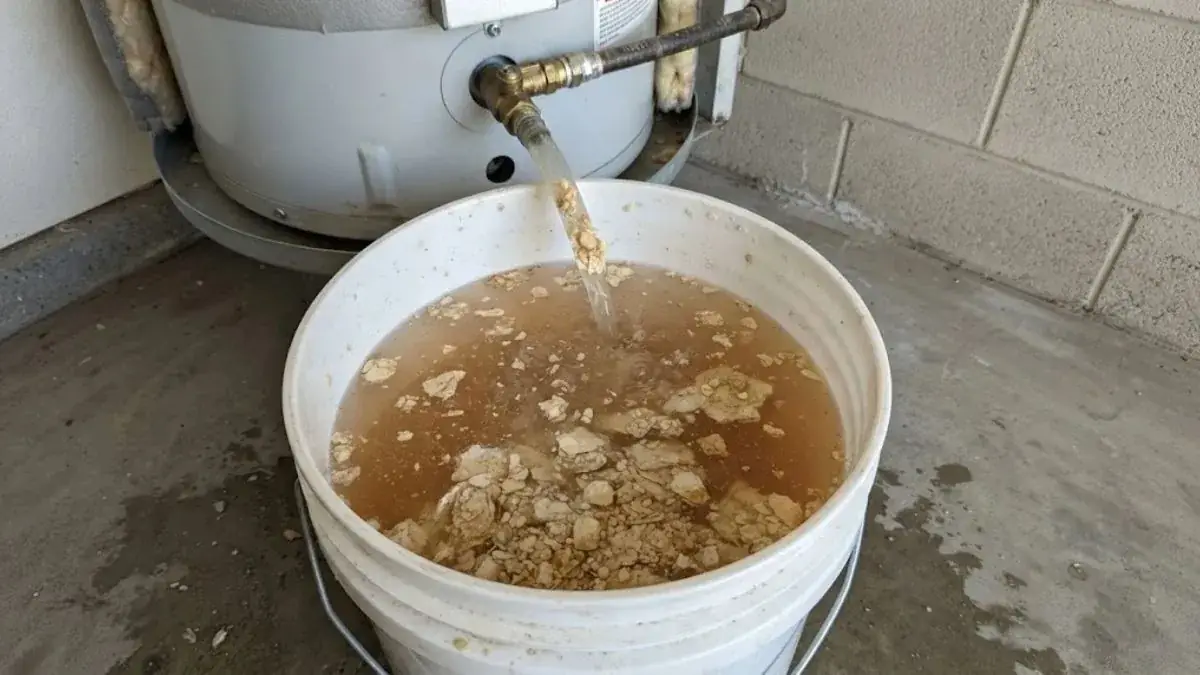
Hardin County Water District No. 1 (HCWD1) says its spring-fed water is hard from contact with rocks and rocky soils. It does not give a hardness figure, so check your own tap and ask HCWD1 for its annual water quality report. Hard water leaves mineral layers that bury lower elements and cause the rumbling you hear during heating.
A service flush drains the tank, loosens sediment and checks the anode rod and relief valve at the same visit. It cannot fix a tank that is already leaking, but it often rescues one that is merely noisy and slow to heat. Ask for it once a year.
Pilot lights, ignition and gas safety
If you smell gas, do not try to relight anything. Walk outside, leave the door open if you can do so safely and call the gas utility or 911 from outside the home. A pilot that keeps blowing out, a yellow or orange flame, or soot on the burner area all point to a repair visit, not a do-it-yourself relight.
If there is no smell and the pilot has simply gone out, follow the instructions printed on the heater's label exactly. If it will not stay lit after one attempt, stop and call.
Outages, ice storms and mixed-age homes
Ice storms hit Hardin County in November 2018 and February 2021, and each brought outages. After power returns, an electric heater may need a breaker reset and a high-limit button push, and a gas model with electronics may need a reset. If those fail, a controller or element is the next suspect.
Radcliff mixes decades-old homes with newer ones, so you may find a 20-year-old tank next to a modern unit with error codes. Older models are cheaper to fix on paper, but a repair that fails again soon is a waste. We also dispatch to Vine Grove and Elizabethtown, so owners of aging heaters there can ask the same questions.
What moves the repair price
A clear price is given before work starts. The factors below explain why two repairs on two heaters can differ.
An igniter or thermostat is a different job from a gas valve or a heat pump component, and parts availability varies by brand.
A heater in an attic or tight closet takes longer to open up and service.
If sediment or corrosion complicates the work, the plumber may recommend flushing first or suggest replacement.
After-hours emergency visits carry different scheduling costs than a planned daytime appointment.
Most homeowner policies cover sudden burst or accidental discharge but not wear. Photograph any water damage and ask your insurer what applies.
Water on the floor: do this while you wait
These steps protect the house if the tank is leaking.
- Close the cold supply valve on the inlet pipe at the top of the tank.
- Turn off the breaker or set the gas control to off.
- Lift boxes, rugs and stored items out of the water path.
- Photograph the heater, data plate and damage for your records.
- Note the fuel type, the age and any error code on the display.
- Keep children and pets away from hot discharge pipes.