
A toilet problem that cannot wait until Monday
If water is climbing toward the rim or spreading across the bathroom floor, the 24/7 line is the right call, at midnight or on a holiday. Reach behind the toilet and turn the small oval handle on the supply valve clockwise until it stops. That cuts the tank refill and usually ends an overflow that is caused by a stuck float.
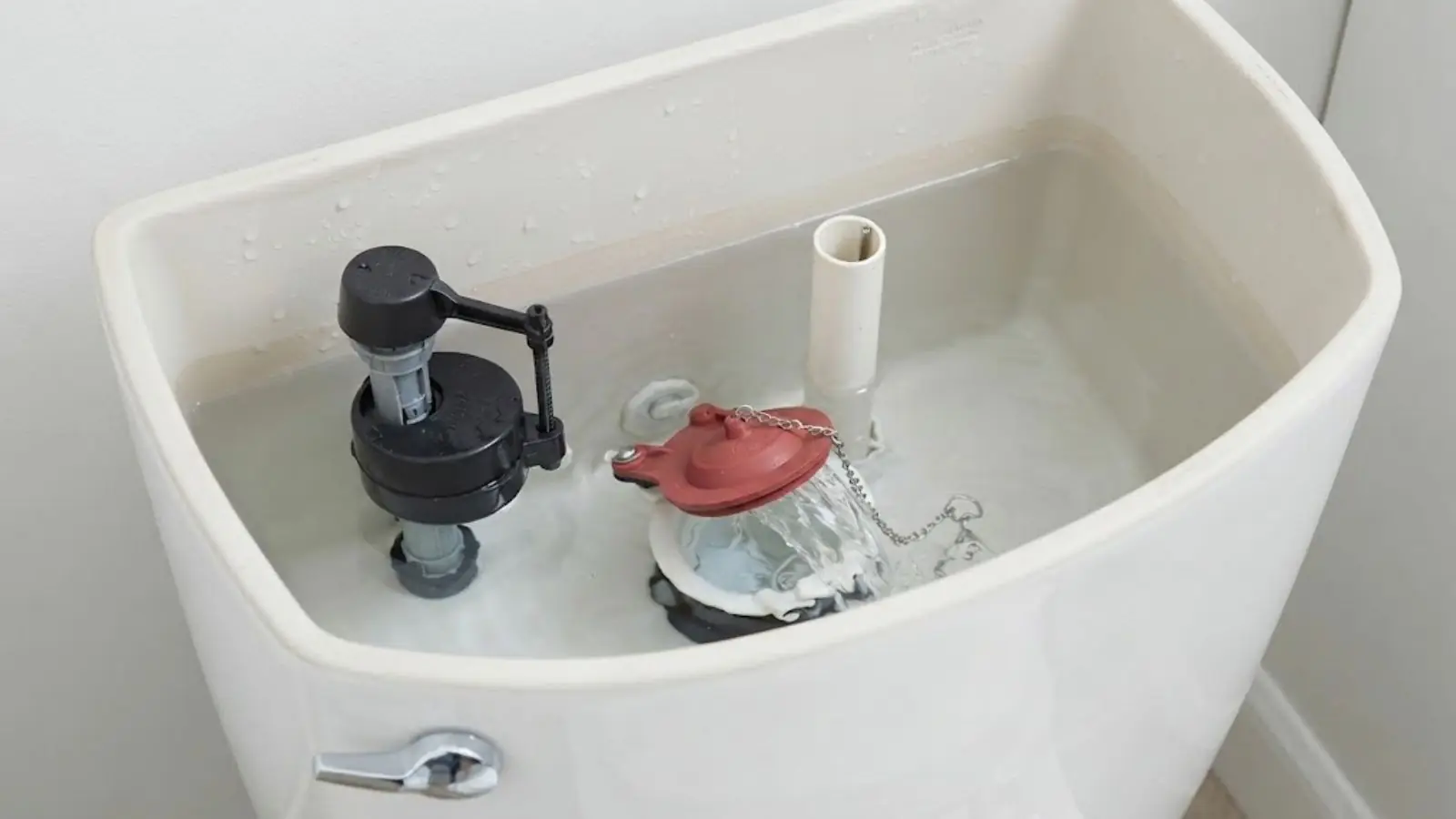
Most toilet failures come down to a short list of parts. The fill valve lets water in, the flapper lets it out into the bowl, and the wax ring seals the base to the drain flange in the floor. A plumber works through those three in order, and the symptom tells you where to start.
Overflow emergency: what to do first
Do these in order. Each one takes under a minute and each one limits the damage to the floor below.
Close the supply valve
Turn the oval handle behind the bowl clockwise. If it spins freely or will not move, go to the next step.
Lift the tank lid
Push the rubber flapper down into its seat, or lift the float arm so the tank stops refilling.
Stop flushing
Every extra flush pushes more water over the rim if the drain is blocked.
Shut the water at the main
If the valve will not close, find the main shutoff for the house and turn it off.
Soak up standing water
Towels first, then a wet vac. Water that sits under vinyl or laminate starts lifting it quickly.
While you wait for the plumber
A few minutes of prep means the visit goes straight to the repair.
- Clear a path to the bathroom and move rugs, baskets and cleaning supplies away from the toilet.
- Tell the dispatcher which fixture it is and whether other drains in the house are slow too.
- Note whether you are on city sewer or a septic tank so the right plumber is sent.
- Photograph any water damage on the floor or ceiling below before you clean up.
- Keep children and pets out of the room if the water came up from the drain.
Running, leaking, clogged or rocking: reading the symptom
Each symptom points at a different part. This table is how a plumber narrows it down before touching a wrench.
| What you see | Likely cause | How it gets checked |
|---|---|---|
| Tank refills every few minutes | Worn flapper or chain | Dye in the tank, watch the bowl |
| Hissing that never stops | Failing fill valve | Listen, lift the float, test shutoff |
| Water pooling at the base | Failed wax ring or loose bolts | Dry the floor, flush, watch the seam |
| Bowl rocks when you sit | Loose flange or soft subfloor | Press the base, probe the floor |
| Water beads on the tank | Condensation or bad tank bolts | Wipe dry, check under the tank |
| Bowl fills high and drains slowly | Clog in the trap or branch line | Closet auger, then a drain camera if it returns |
| Water drips from the supply line | Worn connector or valve packing | Tighten, then replace the line |
The water bill behind a running toilet
Hardin County Water District No. 1 says a toilet that keeps running can waste up to 4,000 gallons a day. That is why a quiet toilet in the middle of the night can turn into a very loud bill. Customers in Radcliff are billed for sewer based on water use too, so the loss shows up twice.
You can test it yourself. Put a few drops of food coloring or a dye tablet in the tank, do not flush, and wait about 15 minutes. Color in the bowl means the flapper is leaking and the repair is usually a part swap, not a new toilet.
Wax rings, flanges and the floor under them
The wax ring is a thick gasket that seals the toilet outlet to the drain flange. When a toilet has been rocking for months, the seal breaks and slow leaks soak the subfloor. A plumber lifts the toilet, looks at the old ring, then checks the flange for cracks, rust or a height problem.
Flanges in older homes are often cracked or sitting below the finished floor. A repair ring or a new flange fixes that. If the plywood around it is dark or spongy, the floor needs to be repaired before the toilet goes back down, because a new seal on soft wood will rock loose again.
When a new toilet beats another repair
A cracked bowl or a tank that leaks from the china is not repairable. The same goes for a toilet that clogs on most flushes even after the drain is cleared. A fill valve or flapper on a sound toilet is a small repair and worth doing.
Installing a new one means checking the rough-in, which is the distance from the wall to the center of the drain. Most toilets are made for one standard distance, so measuring first avoids a unit that will not fit. The plumber also sets the flange, a new supply line and a working shutoff valve. For other remodel work, see our plumbing installation page.
What moves the cost of a toilet repair
The price is set after the plumber has seen the problem, and you hear it before work begins. These are the factors behind it.
A flapper or fill valve is a small job. A flange or a broken closet bolt takes longer. A new toilet adds the fixture itself.
A soft subfloor needs to be opened and dried before anything is reset. That is often carpentry beyond the plumbing visit.
Old valves sometimes break when turned. Replacing the valve is a separate step but it makes every future repair easier.
Nights, weekends and holidays are handled through the same line, and the time of the visit is part of the price discussion.
Many homeowner policies cover sudden accidental discharge but not slow wear. Photograph the damage and ask your insurer before you decide.
Rentals, short stays and Radcliff's turnover
Radcliff is next to Fort Knox, so many homes change hands or tenants often. Toilets in rentals take heavy use and may have gone years without a new flapper. Landlords and property managers can use the same line for a repair and ask for a clear price first.
The crew also covers Vine Grove and nearby parts of the county. Tell the dispatcher the unit number, who can give access, and whether the tenant is home.
Check before you replace the whole toilet
A toilet that clogs once is a drain problem. One that clogs every few days, along with a slow tub or sink, points at the line behind it. Have the line looked at by a plumber who clears the drain line before spending money on a new fixture. A hidden leak elsewhere in the house can also show on the meter, so tracing a hidden leak is the next step if the meter moves with every fixture off.