
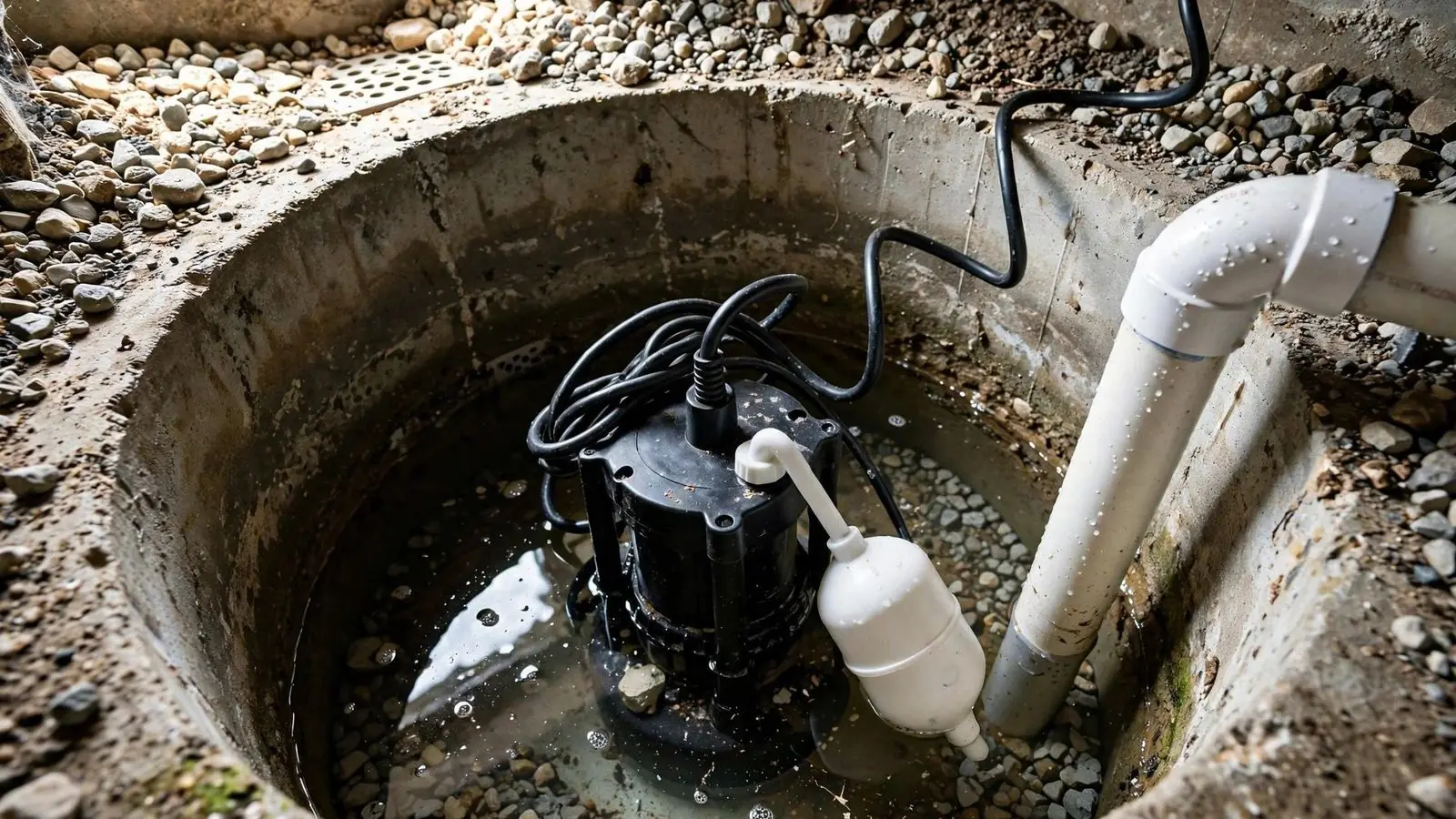
Who does the work
A licensed plumber is the usual choice when you have an existing pit and need a pump set, replaced or connected to a discharge line. The pump, the check valve and the pipe are plumbing. A plumber can also add a battery backup unit and test the whole setup under load.
A basement contractor makes more sense when the pit itself does not exist yet. Cutting the slab, laying drain pipe around the footing and pouring back the concrete is excavation and concrete work. An electrician handles the circuit, usually a dedicated outlet with ground fault protection.
Which trade fits your situation
Many jobs need more than one trade. This table shows who normally leads each one.
| Your situation | Lead trade | Others who may help |
|---|---|---|
| Pit exists, pump died or is noisy | Plumber | None usually |
| Pump works but no check valve or battery backup | Plumber | Electrician for a new outlet |
| No pit, water seeps through the floor | Basement contractor | Plumber for the discharge |
| Pump trips breaker or outlet is dead | Electrician | Plumber to check the pump |
| Water enters through walls or the floor joint | Basement waterproofing crew | Plumber for the pump side |
If you are not sure which row fits, start with the one who can see the pit. A plumber standing at the basin can tell whether the problem is the pump, the pipe or the water coming in.
What a good installation includes
A pump dropped into a hole is not an installation. Look for these parts, and ask about any that are missing.
- A pit, or basin, set so the pump sits level on a firm base and not on loose gravel that can foul the float.
- A pump sized for the water load, with a float switch that moves freely and does not rub the basin wall.
- A check valve on the discharge line so water does not drain back into the pit after each cycle.
- A discharge pipe that carries water out of the house and away from the foundation, and that ends where it will not freeze shut or flow back toward the house.
- A weep hole drilled in the discharge pipe below the floor, if the pump manufacturer calls for one, to prevent airlock.
- A lid on the basin, which keeps debris out and cuts down on damp air and odors.
- A dedicated outlet, ideally protected, so the pump is not sharing a circuit with a freezer or washer.
Battery backup and why people skip it
A sump pump runs on household power. Heavy rain and severe storms can also knock out power, which means the pump stops when you need it most. A battery backup, or a second pump on its own battery, covers that gap for a limited time.
People skip it because it is an added cost and because the main pump has never failed. Ask yourself what is in your basement and how long you can be away. If you store belongings, finish the space or travel often, the backup is cheap insurance against a flooded room.
Radcliff rain, sinkholes and sump pump load
The 2023 Lincoln Trail hazard mitigation plan says Radcliff drains into 86 known sinkholes. The Quiggins Sinkhole, in the Happy Valley watershed, flooded in 2008.
FEMA's assessment in the plan says as little as one inch of rain over six hours could cause major flooding there. A pump that has to handle fast inflow needs reliable power and a clear discharge route.
Source type: regional government plan (2023 Lincoln Trail Hazard Mitigation Plan).
What moves the price of the job
No two installs cost the same. A plumber will give you a clear price before work starts. These are the factors behind it.
Cutting concrete and digging a new basin adds labor and materials. Using an existing basin is much simpler.
A pedestal pump costs less but is louder and more exposed. A submersible pump sits in the water, runs quieter and handles heavier loads.
A short run out a nearby wall is easy. A long run, a buried line or a route that avoids freezing takes more work.
Battery units, water level alarms and a second pump each add parts and labor.
A new outlet or a dedicated circuit may need an electrician. Existing grounded outlets keep the job small.
Insurance note: many homeowner policies cover sudden accidental discharge but not wear or seepage, and some exclude sump pump failure unless you add a rider. Ask your insurer, and photograph any damage before cleanup.
Steps a plumber takes on a typical swap
When a pit already exists, replacing a failed pump follows a predictable order.
Cut power and clear the pit
The plumber unplugs the old pump, removes standing water and takes out debris that may have jammed the float.
Remove the old pump and check valve
The discharge line is disconnected at the union and the old valve is checked for leaks or a stuck flapper.
Set the new pump
The pump goes in level on a solid base with the float clear of the walls and the cord routed safely.
Rebuild the discharge connection
A new check valve and fittings go on, with a weep hole if the maker calls for one.
Test under load
The plumber runs water into the pit until the float lifts, watches the pump empty it, and checks that the outside end flows freely.
Safety while water is rising
If water is already coming into the basement, safety comes before the pump. Standing water and electricity are a bad mix.
- Do not walk into standing water if outlets, cords or the panel are low or wet. Water plus power can shock.
- If water has reached outlets or the electrical panel, leave the basement and shut off power at the main only if you can reach it dry.
- Unplug the pump only when your hands and feet are dry and the outlet is above the water.
- Move valuables upward, not outward, so you do not carry them through water.
- Call the 24/7 line for a pump or discharge problem, and tell the dispatcher how high the water is.
Putting it together
If you already have a pit, a sump pump service visit from a plumber is the quickest path. If water enters through walls or the slab, the real fix may be drainage or sealing, which is covered in basement waterproofing work.
Homeowners in Vine Grove and Elizabethtown can use the same line. Tell the dispatcher whether the pump is dead, noisy or running nonstop, so the right plumber arrives with the right parts.
Frequently asked questions
Yes. Replacing a pump, adding a check valve, running the discharge line and fitting a battery backup are plumbing tasks.
A plumber usually does not cut a new pit in the slab. That part often goes to a contractor who does concrete work.
Only if the outlet is missing, ungrounded or sharing a crowded circuit. A grounded outlet that is working lets a plumber plug the pump in and move on.
If the breaker keeps tripping, have the circuit checked before replacing the pump.
In most installs, yes. Without one, water in the discharge pipe runs back into the pit after each cycle, so the pump turns on again and again.
A check valve also protects the pump from short cycling, which wears it out faster.
Many pumps last around seven to ten years, though heavy use and debris shorten that. A pump that runs often lives a harder life than one that rarely turns on.
Test it by pouring water into the pit and watching the float lift and the pump empty the basin.
Tell them as soon as you see water, with photos. A failed pump is usually a building issue, and the owner decides who is called.
If you manage the property, call the 24/7 line and have a tenant contact ready.
The city drains into 86 known sinkholes, and heavy rain can overwhelm low spots quickly. Whether your lot is near one of those low areas affects how hard the pump works.
Not every Radcliff home has a basement, so ask a plumber what applies to yours.