
Why a single number would mislead you
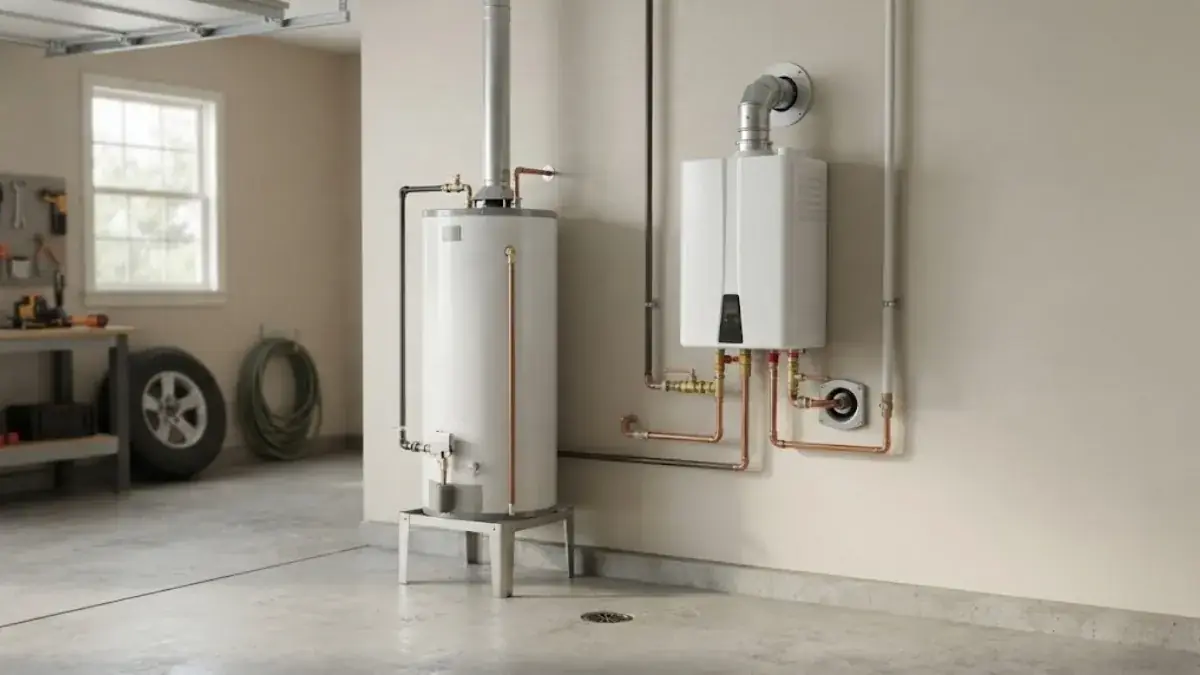
A power vent water heater is a gas-fired tank with an electric blower on top that pushes exhaust out through a pipe, often plastic, that can run horizontally through a wall. The blower is what lets the installer put the heater where a traditional chimney could not reach.
That flexibility is also why the cost swings. The tank is only one line in the job. The vent route, the nearby outlet, the gas piping, the old unit's removal and the paperwork can each add or subtract real money. We do not quote figures in an article because your house decides them. What we can do is show what to ask about.
Power vent versus atmospheric, in plain terms
An atmospheric water heater relies on warm exhaust rising by itself through a vertical flue. A power vent uses a fan. That difference ripples through the whole install.
| Feature | Atmospheric | Power vent |
|---|---|---|
| Exhaust path | Vertical flue to roof or chimney | Fan pushes exhaust out pipe, often through a side wall |
| Needs electricity | No | Yes, for the blower |
| Placement freedom | Limited by chimney or flue | Much greater |
| Noise | Quiet | Audible blower hum |
| Air for combustion | Draws from surrounding room | Often draws from room or outside, per model |
| What can fail | Fewer parts | Blower, pressure switch, sensors |
| Typical reason to choose | Existing flue works | No usable chimney, or you want to relocate |
If your current heater is atmospheric and its flue is sound, replacing it with another atmospheric unit usually has fewer cost drivers than switching to power vent.
The factors that move the price
Ask each quoting plumber to address these by name. A written quote that skips one is hiding a possible add-on.
A short straight run through a nearby wall is the simplest. A longer run, extra elbows, or a route through finished space adds pipe, labor and wall repair. The manufacturer limits how far and how bent the vent can be.
The blower needs power. A grounded outlet within reach is easy, while one that must be added or moved means an electrician's time and wiring.
The existing gas pipe must carry the unit's load and have a shutoff and sediment trap in good shape. Old or undersized piping may need replacement.
A larger capacity costs more, and brands differ in warranty terms, parts availability and features such as condensing vents. Choose the size from your household's hot water use.
Getting an old tank out and taking it away is a labor item. Tight stairs or a cramped closet make it harder.
Permit rules vary, so ask the city building department what applies to your address. Some places add a permit fee and an inspection visit to the schedule.
A basement with a door is simple. A tight closet, crawl space or attic raises the labor involved.
A new relief valve discharge pipe, an expansion tank, floor protection and a drain pan can all be part of a correct install.
How to compare quotes fairly
A fair comparison means every quote covers the same list.
Give every plumber the same facts
Share the current heater type, where it sits, the tank size you want and any plans to move it.
Ask for the vent plan
Where does the pipe exit, how long is the run, and what material is used?
Ask what is not included
Electrical work, gas piping changes, permit handling and haul-away are common exclusions.
Get the price before work starts
A clear price in writing before the work begins prevents surprises at the end.
Compare warranty paperwork
Look at what the maker covers and what the installer stands behind.
Installing, replacing or upgrading: three paths
A like-for-like swap is the least complicated path. Our page on replacing a water heater covers what that includes. A first-time install in a new location, or a switch from atmospheric to power vent, is a new installation, and it may involve gas, vent and wiring changes.
If you are finishing a basement, adding a bathroom or remodeling a utility room, the heater is only one piece of a bigger plan. A plumber doing new fixture and line installation can fold the heater into the same visit as other new lines.
Radcliff permits and local water
Permit rules vary, so ask the city building department what applies to a water heater at your address. Ask whether an inspection is expected after the install, and whether that is something the plumber schedules or you do.
Hardin County Water District No. 1 says in its FAQ that its supply is hard because of exposure to rocks and rocky soils. No figure is published, so test your tap and ask HCWD1 for its annual water quality report. Hard water speeds sediment buildup in a tank, which is a reason to ask about flushing and anode checks when you compare warranties and maintenance advice.
Source type: HCWD1 utility FAQ and building department guidance.
Insurance note
A planned replacement is a maintenance cost, and homeowner insurance usually does not pay for it. Most policies cover sudden bursts or accidental discharge, but not wear. If a failing tank has already flooded part of your home, photograph the damage before cleanup and ask your insurer what it covers.
Is power vent worth it?
These situations tend to favor a power vent unit.
- There is no chimney or the old flue is damaged, undersized or shared with a unit that is gone.
- You want to move the heater to a laundry room, garage or other spot with a wall near it.
- A new, tighter house cannot support a conventional flue.
- You are comfortable with a blower sound and know where the power outlet is.
If none of these apply, a standard atmospheric replacement may be simpler. A licensed plumber can look at the existing flue and tell you.
Before the plumber arrives
These small steps keep the job on schedule.
- Clear a three-foot path from the door to the heater and remove stored items from around it.
- Photograph the old heater's label with its model, size and fuel type.
- Find out where the nearest working outlet is and whether it is grounded.
- Note where a vent could exit the wall on the outside of the house.
- Locate your water shutoff and test that it actually closes.
Frequently asked questions
Usually the scope differs, not the tank. One quote may include the vent run, electrical work, gas piping, haul-away and a permit, while another lists only the unit and basic labor. Ask each plumber to itemize those lines.
Differences in brand and tank size also matter.
Yes. The blower and controls need standard household power, typically from a grounded outlet near the unit. If your heater is far from one, add the cost of running power to your list of factors.
It also means the heater will not vent during a power outage, so plan accordingly.
Often yes, but it is a new install and not a simple swap. The old flue may be capped or removed, a vent pipe must be routed, and an outlet must be present. A licensed plumber can look at the space and tell you what would change.
Moving the unit adds more work.
Homeowner policies generally cover sudden and accidental damage, such as a tank that bursts and floods a room. They typically do not cover the heater itself when it wears out. Your policy language decides, so ask your insurer.
Photograph any water damage before cleanup.
HCWD1 describes its supply as hard, so sediment and scale are fair concerns for any tank here. It does not publish a hardness number we can cite, so test your tap and request the district's annual water quality report.
Ask your installer about flushing, anode rod checks and the maker's warranty conditions.
Yes. See our pages for an emergency plumber in Vine Grove and for an emergency plumber in Elizabethtown. Same-day appointments are offered when available.