
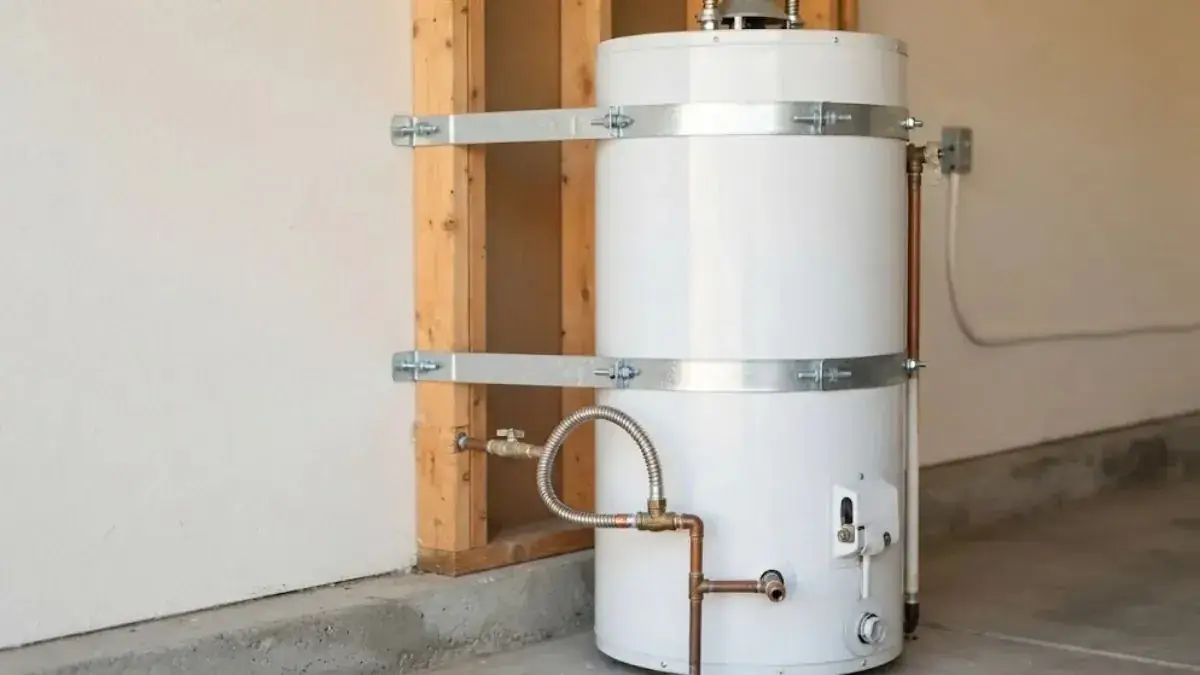
What a water heater installation really covers
Water heater installation is the work of placing a new heater and connecting it to water, fuel or power, venting and a safe discharge path. The unit itself is the easy part. The pipe, valve and vent details around it decide whether the heater runs safely for a decade or causes trouble in year two.
Planned installs are scheduled by appointment, and same-day slots are offered when available. If your current heater is already leaking, start with the emergency replacement page, because that situation moves faster than a planned job.
The parts of a proper install
Ask whoever quotes the job whether each of these is included. Skipped items are where shortcuts hide.
- Shutoff valves on the cold inlet, so the heater can be isolated without closing the whole house.
- Flexible connectors or new copper or PEX piping in good condition at both the hot and cold sides.
- A temperature and pressure relief valve, with a discharge pipe that runs downward to a safe, visible end point.
- An expansion tank where the water system is closed, for example with a backflow device or pressure reducing valve.
- A drain pan with a drain line where a leak could reach finished floors or living space below.
- For gas models, a correct vent connection, a sediment trap and a leak test at every gas joint.
- For electric models, a circuit sized to the unit, a disconnect and tight wiring terminals.
- Removal of the old tank, which is part of the job to confirm on the call.
What to do if the old heater fails first
A leaking tank should be treated as urgent. Turn off the power or the gas control, close the cold-water valve above the heater, and keep people away from standing water near electrical outlets. Do not touch a unit that is hot to the touch or smells of gas. Call the 24/7 line, and the plumber can turn a planned install into a same-day job when an appointment is available.
Where the heater sits changes the work
Heaters end up in garages, closets, attics and basements, and the location shapes the work. The table shows common problems by spot. It is a general guide, since every house differs.
| Location | Common install issue | What to plan for |
|---|---|---|
| Garage | Freeze risk, car impact, ignition source height | Insulated lines, a stand and a protective post where needed |
| Closet | Tight clearance and combustion air | Vent path, louvered door and a pan |
| Attic | Leak damage to ceilings below | Pan with a drain line, safe access and a platform |
| Basement | Stairs for moving the tank, floor drain location | Planning the route and a drain-friendly pan |
| Utility room | Limited vent options | Confirm the existing vent or add a new run |
Radcliff saw ice storms in November 2018 and February 2021, so a heater in an unheated garage or attic deserves insulated supply lines and a close look at its exposure to cold.
Gas or electric, and why it matters
A like-for-like swap keeps the existing fuel and is the fastest path. Changing from electric to gas means a new gas line and a vent, and going the other way means a panel circuit and capped gas. Each change adds parts and time.
If you are not sure whether your gas line can feed a bigger unit, ask for the line size and run to be checked during the quote. A heater starved of gas runs poorly and can shut off under heavy demand.
Choosing a tank size
Size follows how many people use hot water and when. These are general starting points.
A 30 to 40 gallon tank usually handles the load. Check the first hour rating if two people shower back to back.
A 40 to 50 gallon tank is the common fit. A household with teenagers and a dishwasher may feel better with 50.
Look at 50 to 75 gallons or consider a tankless model sized for flow. Space and fuel type limit the options.
Height, diameter and the vent path may rule out a larger unit in a closet. Measure before ordering.
How a typical install day goes
The order below holds for most tank installs.
Walk the site
The plumber checks the location, vent, gas or electric supply and the route for the old and new tanks.
Shut off and drain
Water, gas and power are isolated and the old tank is drained safely.
Set and connect
The new heater is placed on its pan or stand and plumbed, vented and wired to match the plan.
Fill and test
The tank is filled with a hot tap open to purge air, then gas joints or electrical terminals are tested.
Check the relief and set temperature
The discharge pipe is confirmed, the temperature is set to a safe level and the homeowner gets a short walkthrough.
Timing varies with the location and the fuel, so ask the dispatcher for a realistic plan when you describe your setup.
Hard water and the install-day decisions
Hardin County Water District No. 1 (HCWD1) describes its spring-fed supply as hard because of rocks and rocky soils, without publishing a hardness figure. Test your tap and ask HCWD1 for its annual water quality report before choosing a heater. If scale is a concern, ask about a flush plan, an anode rod check schedule and whether a softener fits your home.
A new tank starts clean, and keeping it that way costs far less than replacing it early.
Permits and the city building department
Permit and inspection rules vary, so ask the city building department what applies to your address before the job. Radcliff, Vine Grove and Elizabethtown are separate cities with their own offices, and unincorporated areas follow other rules. Tell the dispatcher your address so the plumber knows which jurisdiction applies.
We serve Vine Grove and Elizabethtown as well, and the same question applies there.
What affects the installed price
A clear price is stated before work starts. These factors move it.
Standard tanks, tankless and heat pump models run in very different price tiers, and larger units cost more.
A new vent run, a gas line change or a new circuit can add more labor than the heater itself.
Attics, tight closets and basements take longer than an open garage.
Expansion tanks, pans, new shutoffs and relief piping may be needed on top of the swap.
Homeowner policies cover sudden burst or accidental discharge but typically not wear. A planned replacement is usually not covered, so ask your insurer.