
The honest answer first
A basement waterproofing coating is a paint-on or roll-on layer, often a rubberized or cement-based product, applied to the inside face of a wall or floor. It works on damp walls and light moisture vapor. It does not reliably stop liquid water forced through the wall by pressure from wet soil outside.
That gap explains most failures. People apply a coating to a wet wall, it looks dry for a few months, and then blisters, flakes or peels as water builds up behind it. Coatings have a place, but they are the finishing layer, not the whole fix.
Why water gets in: hydrostatic pressure
When soil around a foundation soaks up rain, the water in it presses against the wall and the floor joint. Engineers call this hydrostatic pressure. A tall column of saturated soil pushes harder than a thin one.
That pressure finds the weak spots. It forces moisture through hairline cracks, the joint where wall meets floor, pipe penetrations and porous block. A thin coating on the inside face has to resist that push from the wrong side, which is why interior coatings often lose the fight.
What a coating does and does not do
Use this to match the product to the problem you actually have.
| Condition | Coating alone | What may be needed |
|---|---|---|
| Damp feel, no puddles | Often enough | Better grading and gutters |
| Efflorescence, white powder on masonry | Short-term only | Find and reduce the moisture source |
| Hairline cracks that weep after rain | Weak | Crack repair or injection by a pro |
| Water at the floor and wall joint | Usually fails | Interior drainage and a sump pump |
| Standing water after storms | No | Drainage, pump and exterior review |
| Mold smell with visible growth | No | Fix the moisture, then clean the surface |
Radcliff rainfall, sinkholes and wet basements
The 2023 Lincoln Trail hazard mitigation plan records that Radcliff drains into 86 known sinkholes. The Quiggins Sinkhole in the Happy Valley watershed flooded in 2008.
FEMA's assessment in that plan says as little as one inch of rain over six hours could cause major flooding there. Not every Radcliff home has a basement, so check which foundation type your house has before planning any work.
Source type: regional government plan (2023 Lincoln Trail Hazard Mitigation Plan).
Surface prep decides whether it lasts
Most coating failures start with preparation, not the product. If you decide to coat a damp but not wet wall, follow the label and these basics.
Find out how wet the wall is
Tape a square of plastic sheeting to the wall for a day or two, and check whether moisture collects under it or on the room side.
Clean off loose material
Wire brush paint, efflorescence and flaking masonry until you reach sound surface, then wash and let it dry.
Patch cracks and holes
Use a product made for masonry repair and follow its cure time before coating over it.
Apply in the stated coats
Follow the manufacturer's thickness and drying times, since a thin single coat is the usual cause of pinholes.
Watch it through the next wet spell
Check the wall after heavy rain for new blisters, dark patches or a salty film.
When drainage is the right answer instead
A coating treats a surface. Drainage reduces the water that reaches it. Consider drainage if you see any of these.
- Water at the floor and wall joint after rain, even if the walls above look dry.
- Puddles or a dark band of damp along one wall.
- A sump pit that fills often or a pump that runs for long stretches.
- Repeated peeling after you have already coated the wall once.
- Musty air that comes back after dehumidifying.
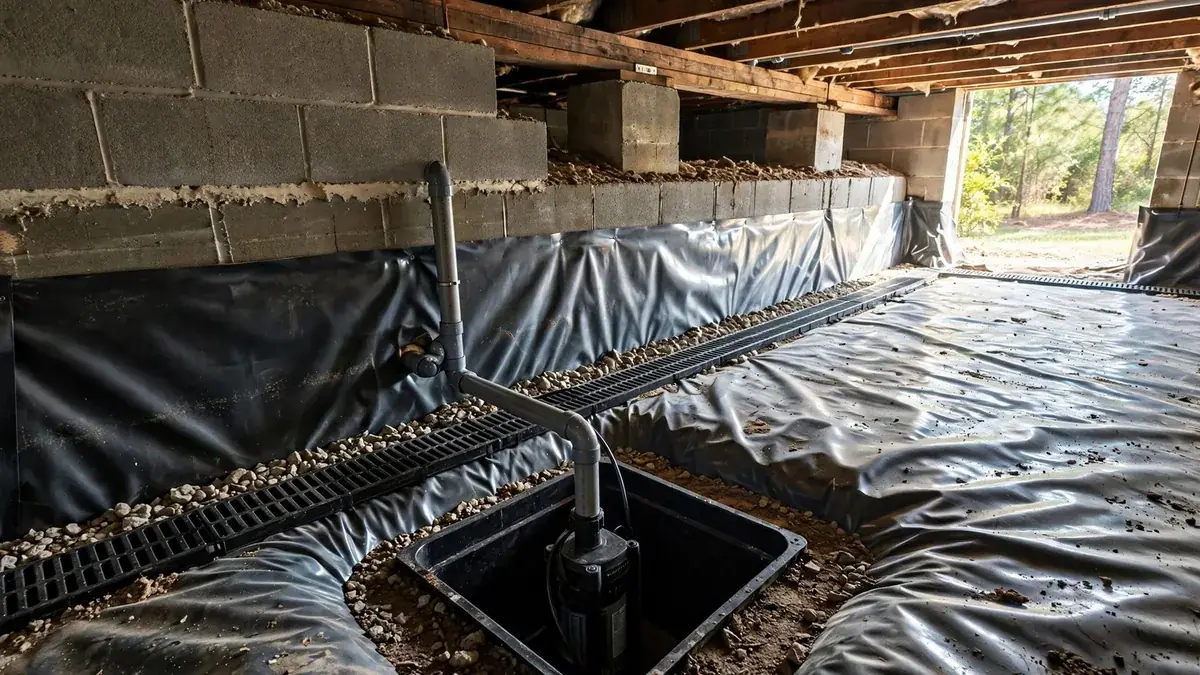
Interior drainage collects water at the footing and sends it to a sump pit, where a pump discharges it outside. That setup works with the water instead of trying to hold it back. See how basement waterproofing work is scoped and where a sump pump fits in.
What a licensed plumber looks at
A plumber checks the sources you cannot see. A slow leak in a supply or drain line can make a wall damp for months, and no coating fixes that. A pressure test on supply lines and a look at the drain and sump discharge rule plumbing in or out before you spend on surface work.
If your pump runs constantly in dry weather, that points to a leak or a high water table, not a coating problem. Tell the dispatcher what you see, including where the damp is and whether it follows rain or is constant.
What moves the price of waterproofing work
Quotes vary widely because the problem varies. A clear price comes before work starts, and these are the factors behind it.
A single wall or crack costs far less in labor than perimeter drainage. Ask what is included and what is not.
Poured concrete, block and old stone behave differently. Block walls can hold water inside the cores, which changes the approach.
Paneling, framing and stored belongings must be moved, and finished spaces take longer to open and restore.
A pit, pump, check valve and discharge line each add parts and labor.
Poor grading, short downspouts and clogged gutters may need attention outside, and no interior system replaces that.
Insurance note: most homeowner policies cover sudden accidental water damage but not seepage or gradual wear. Ask your insurer, and photograph the area before cleanup.
Safety and mold cautions
Wear gloves, eye protection and a rated respirator when brushing masonry or using coatings, and ventilate the room. Do not coat over visible mold. Dry the space and fix the moisture first. If the damp is near an electrical panel or outlets, keep the power off and call a licensed plumber to find the water source.
Where this leaves you
A coating is a reasonable step for a damp, otherwise dry wall that you have prepped well. For any active leak, a pump or drainage plan comes first. Calling a plumber does not commit you to a big job. It tells you which category you are in.
Bring a few photos of the damp areas, note whether the water follows rain, and say whether the basement is finished, so the plumber can plan tools and parts. A wall that stays damp through a dry week points to a different cause than one that only weeps after storms.
The same 24/7 line serves Vine Grove and Elizabethtown as well as Radcliff, so a neighbor with the same problem can call.
Frequently asked questions
It seals light moisture on a prepared surface. It does not stop water pushing through a wall under pressure.
For active leaks, the better fix is usually drainage and a pump.
No. Most products need a dry, clean surface, and trapped water makes the coating bubble and peel.
Find the moisture source first, let the wall dry, then follow the label.
Efflorescence. Water carries minerals through masonry and leaves them on the surface when it evaporates.
It means moisture is moving through the wall. Brushing it off helps appearance, but the source still needs attention.
They do different jobs. A coating treats damp surfaces. A pump removes water that collects below the floor.
Many wet basements need drainage and a pump, with a coating as a final step at most.
A licensed plumber can check the pump, the drain and any supply leaks, and look at the pattern of moisture.
A waterproofing contractor handles excavation and wall repair. Often both are involved.
No. Some Radcliff homes have a slab or a crawl space instead. Tell the dispatcher which type you have, because the water problems and fixes differ.
The city also drains into 86 known sinkholes, so low lots can see fast runoff in heavy rain.