
Run the meter test first
The test takes about an hour, most of it waiting. Do it when no one is using water.
Stop all water use
Shut off every fixture and appliance, including the ice maker, dishwasher, washing machine, irrigation and any humidifier on a water line.
Find and open the meter box
It is usually near the curb or property line, under a lid you can lift with a screwdriver, and watch for insects or a sharp edge before reaching in.
Read it and note the leak indicator
Write down the numbers and look for the small red arrow or dial that spins when any water is moving.
Wait 30 to 60 minutes
Do not flush or run a tap during the wait, and keep everyone in the house informed.
Read it again
A changed reading, or a red indicator that kept turning, means water is passing the meter while nothing is on.
If the number did not change, the leak may come and go, or the high bill may come from use you have not noticed. If it did change, move on to the next section.
Which side of the meter is the leak on?
Water leaves the meter and passes a shutoff valve at your house. Close the main valve at the house, then check the meter again. If the red arrow stops, the leak is inside the house. If it keeps moving, the leak is in the buried line between the meter and the house.
That one test cuts the search in half. A leak inside usually shows at a fixture or in a wall or slab. A leak underground may leave a wet or unusually green patch of lawn, a soft spot, or a sound of rushing water near the meter.
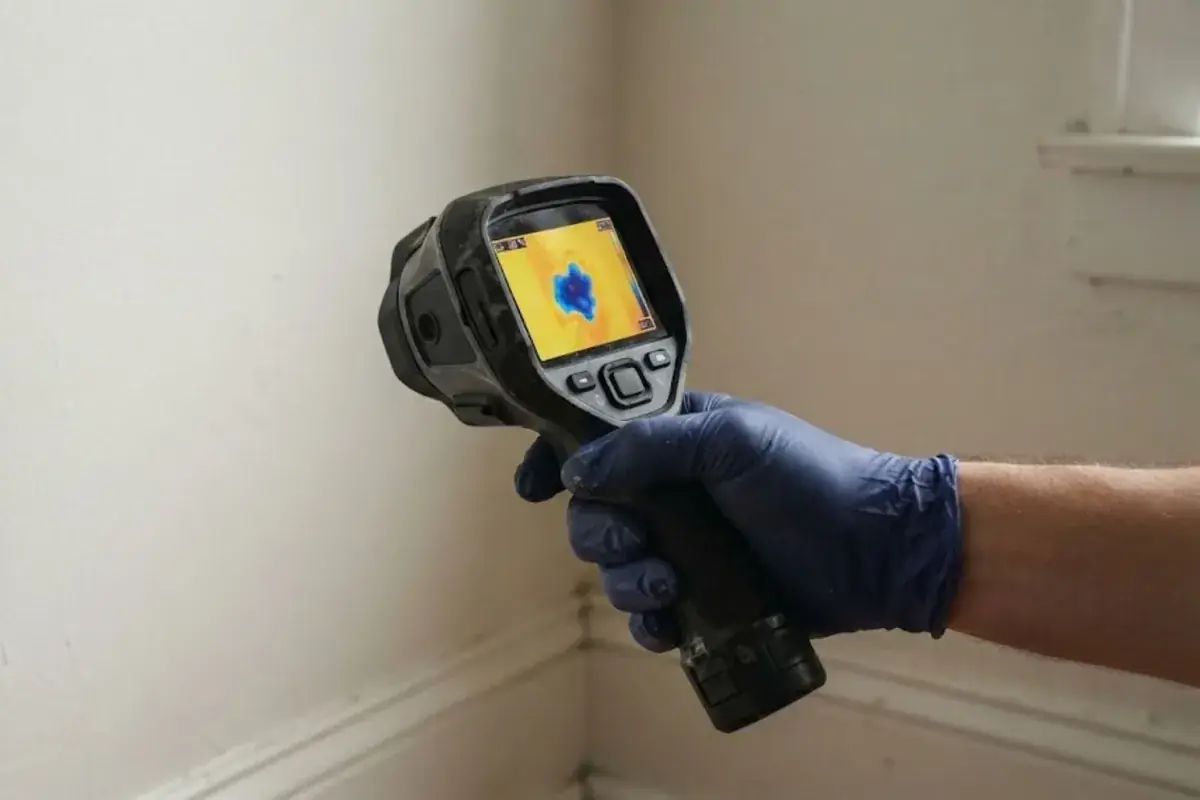
Underground problems often lead to a repair of the buried water line, while hidden leaks inside a wall or slab call for acoustic and thermal tracing.
Common causes, ranked by how often they hide
Start at the top. The cheap-to-check items are usually where the water is going.
| Likely cause | How to check | Next step |
|---|---|---|
| Running toilet | Add food coloring to the tank and wait 15 minutes without flushing | Replace flapper or fill valve |
| Dripping or leaking faucet | Look under sinks and at spouts for steady drips | Replace cartridge or washer |
| Leaking supply line or shutoff | Feel under each fixture for damp | Tighten or replace the line |
| Water heater relief valve | Look for a wet floor or a discharge pipe running | Have a plumber test the valve and pressure |
| Outdoor spigot or irrigation | Check hose bibs and sprinkler valves | Shut off at the valve and repair |
| Underground service line | Close the house main, then check the meter | Locate and repair the line |
| Leak inside wall or under slab | Meter moves, fixtures are dry | Tracing with sound or thermal tools |
Toilets are the usual suspect
Silent toilet leaks are common because the water runs down the bowl without making a sound. Drop food coloring in the tank and wait without flushing. If color shows in the bowl, the flapper is leaking. Flappers are cheap and many people replace them, but if the problem repeats or the fill valve keeps running, a plumber who does toilet repairs can check the whole mechanism.
What Radcliff residents can ask HCWD1
Hardin County Water District No. 1 supplies water in Radcliff and operates its sewer system. Its FAQ gives the same meter test described above, with a red leak indicator arrow on the meter, and says a changed reading after 30 to 60 minutes means a leak.
It also lists rough figures. A toilet that runs can waste up to 4,000 gallons a day, a dripping faucet up to 5,000 gallons a month and a steady stream up to 21,000 gallons a month.
The district says it first needs the cause of the usage past the meter found. A qualifying leak may then get an adjusted rate on the non-leak usage, and sewer may be adjusted if the leaked water did not enter the sewer. Sewer bills are calculated from water use. The details are in the utility tariff, so ask HCWD1 before you assume anything, and keep your repair paperwork.
Source type: HCWD1 utility FAQ.
Shut off, document, then call
If the test says water is leaking and you cannot find it, do this.
- Close the main shutoff at the house if water is visibly flooding anything.
- Photograph the meter reading before and after the test with the time on your phone.
- Photograph any wet drywall, stains or flooring before you dry anything.
- Do not open walls or cut into slabs yourself, because the leak may be on a pressurized line near wiring.
- Keep the power off in any room with standing water and call the 24/7 line if it is spreading.
DIY versus a licensed plumber
You can handle the meter test, the dye test for toilets, a visual check under sinks and the swap of a flapper. Those cost almost nothing and often find the cause.
Call a plumber for a meter that moves with the fixtures dry, a wet spot in the yard, a damp wall, warm floor spots, or a relief valve that runs. Those leaks sit on pressurized lines and tend to get worse. A line that fails can become a flood, so waiting for the next bill to confirm is a poor plan.
If you are a landlord or manager and a tenant reports a high bill, run the same test before assuming it is usage.
Insurance and photos
Many homeowner policies cover sudden, accidental water damage but not slow leaks or wear. Ask your insurer how yours treats this, and photograph any damage before cleanup. Keep your meter photos and your bills, since they show when the usage changed.
Frequently asked questions
Almost always water is moving somewhere. Make sure the ice maker, a softener, a humidifier and irrigation are off first, since those can fill on their own. If the meter still turns, close the house main and test again to learn which side the leak is on.
A very slow creep can also come from a toilet that refills in the background.
HCWD1 states that a running toilet can waste up to 4,000 gallons a day. A dripping faucet can waste up to 5,000 gallons a month. Even a small silent leak can account for a bill that looks odd.
Check toilets first.
HCWD1 says a qualifying leak may receive an adjusted rate on non-leak usage after the cause is found, and sewer may be adjusted when leaked water did not enter the sewer. Rules and eligibility are in its tariff.
Call the district before you pay or dispute a bill, and keep photos and repair records.
Shut the main valve at the house and watch the meter. If it keeps moving, the leak is between the meter and your valve. Signs include a soggy spot in the yard, a patch of greener grass or the sound of water near the meter box.
Do not dig around the area before utilities are marked.
HCWD1 operates the sewer system in Radcliff and calculates sewer bills from water use, so a leak that raises your water use can raise the sewer line too. The district says sewer may be adjusted if the leaked water did not enter the sewer.
Ask HCWD1 how that applies to your account.
Yes. See our pages for an emergency plumber in Vine Grove and an emergency plumber in Elizabethtown. Tell the dispatcher which water utility bills your address, because that depends on the service location.