
The short answer
A water heater discharge pipe is the open pipe attached to the temperature and pressure relief valve, usually called the T&P valve. The valve sits on the tank, and the pipe carries any water or steam it releases down to a safe place you can see.
The rules that matter most are simple. The pipe must never be capped, plugged or fitted with a shutoff valve. It should run downhill the whole way, end in plain sight, and be made of a material rated for hot water. Permit and inspection details for Radcliff vary, so ask the city building department before you change anything.
What the valve and pipe are actually protecting you from
A tank heater holds water that is heated and kept under pressure. If the thermostat fails or a heating element sticks on, the water keeps getting hotter. Heated water also expands, and in a closed system that pushes the pressure up.
The T&P valve is a spring-loaded safety device. When the temperature or pressure passes its rating, it opens and lets water out. The discharge pipe is what keeps that water from spraying across the room or onto a person standing nearby.
Most of the time the valve never opens at all. That is exactly why it is easy to forget, and why a blocked or capped line is so dangerous. A valve that cannot release is a tank with no safety.
Rules of thumb for how the pipe is run
These are general practices, not code citations. The manual that came with your heater and the building department have the final word.
- Use pipe at least as large as the valve outlet, and never reduce the size along the way.
- Choose a material rated for hot water, such as copper or CPVC. Ordinary white PVC is not meant for hot discharge.
- Slope the line downward from the valve to the end, with no sags where water can sit and freeze or rust.
- Leave the end of the pipe plain. No threads, no cap, no plug, no shutoff valve, and no screwed-on fitting.
- Stop the pipe a few inches above a floor drain or the ground, so you can see water leaving and nothing can back up into it.
- Keep the termination where someone will notice a drip, not behind boxes, insulation or a finished wall.
Notice what is missing from the list. There is no step that says to tuck the pipe out of sight. A hidden discharge line hides the warning sign you need most.
Inside the house or outside
Where the pipe ends depends on your floor plan. Each option has a trade-off, and some are better suited to certain heater locations.
| Termination | Works well when | Watch out for |
|---|---|---|
| Floor drain in the same room | Heater sits in a utility room with a drain | Drain clogged or dry trap smells |
| Outside through the wall | Heater is on an exterior wall | Freezing, insects, pipe hidden by shrubs |
| Laundry sink or standpipe | Heater is near the laundry | Tub or sink backing up into the pipe end |
| Drip pan with its own drain line | Heater is in an attic or on a finished floor | Pan drain also needs its own safe end point |
If the heater sits in an attic or closet over finished space, ask a licensed plumber about the pan and its drain. That is a separate line from the T&P pipe and has its own rules.
Things people do that make the pipe unsafe
If your valve drips a little and you are tempted to screw a cap on it, stop. The drip is the valve telling you something. Capping the line hides the symptom and removes the safety. Call a licensed plumber to find out why it is leaking instead.
Radcliff winters and the exterior pipe end
The 2023 Lincoln Trail regional hazard mitigation plan lists ice storms in the Hardin County zone in November 2018 and again in February 2021. Those are the events most likely to matter for an outdoor discharge pipe, since ice can fill the open end.
Permit rules vary, so ask the city building department about the termination point before installing or changing a relief line.
Source type: regional hazard mitigation plan (NWS event table) and city building department guidance.
Why the valve drips and what to do
A steady drip from the discharge pipe has a few common causes. Work through them in order before you decide anything.
Look at the pipe end
Check whether water is dripping during a heating cycle only, or all the time, since only a constant drip suggests a worn valve seat.
Check the house pressure
High supply pressure or a failed expansion tank can make the valve open when the heater runs, and a plumber can test it with a gauge on a hose bib.
Test the valve with a bucket
Place a bucket under the pipe, lift the test lever briefly, and let it snap back, since hot water will come out and the end can be scalding.
Watch for a stuck valve
If water keeps running after the lever returns, or nothing comes out at all, the valve needs replacing, not adjusting.
Turn the heater off if it is hot or loud
Rumbling, steam or very hot water at the pipe means shut off the power or gas at the heater and call a licensed plumber.
Safety first when the pipe is discharging
If water or steam is actively coming out of the pipe, treat it as an overheating tank until a plumber says otherwise.
- Keep people and pets back from the pipe end. The water can be hot enough to scald in a second.
- Switch the heater to off at the thermostat or breaker. For gas, turn the gas control to off or pilot.
- Do not close the cold water supply to the tank unless you must stop a flood. Pressure and heat can still build.
- Never plug or cap the pipe, even briefly.
- If you smell gas or hear a roar from the tank, leave the house and call 911 and your gas utility from outside.
- Call the 24/7 line and tell the dispatcher what you see and whether the heater is gas or electric.
Do it yourself or call a licensed plumber
Some tasks are fine for a careful homeowner. Others are not, because they involve gas, pressure or cutting into plumbing.
| Task | Homeowner | Licensed plumber |
|---|---|---|
| Look at the pipe end for drips or rust | Yes | Not needed |
| Lift the test lever once a year | Yes, with a bucket and care | If it will not reseat |
| Replace a leaking T&P valve | No | Yes, valve must match the tank |
| Reroute or extend the discharge pipe | No | Yes, with permit questions answered |
| Diagnose pressure or expansion tank problems | No | Yes, using a gauge |
Ending the pipe outside in winter
An outdoor termination can freeze shut. Ice inside the pipe end acts like a plug, and a plugged discharge line defeats the valve. This is the main reason an exterior run needs thought, more than a hole through the wall.
A plumber can route the pipe so it slopes continuously, ends in the open air, and does not collect water that sits and freezes. Some homes are better off with an interior drain termination, if the layout allows it. That choice depends on your heater location and the local rules, so it is worth asking before the work starts.
How this fits a new heater or a repair job
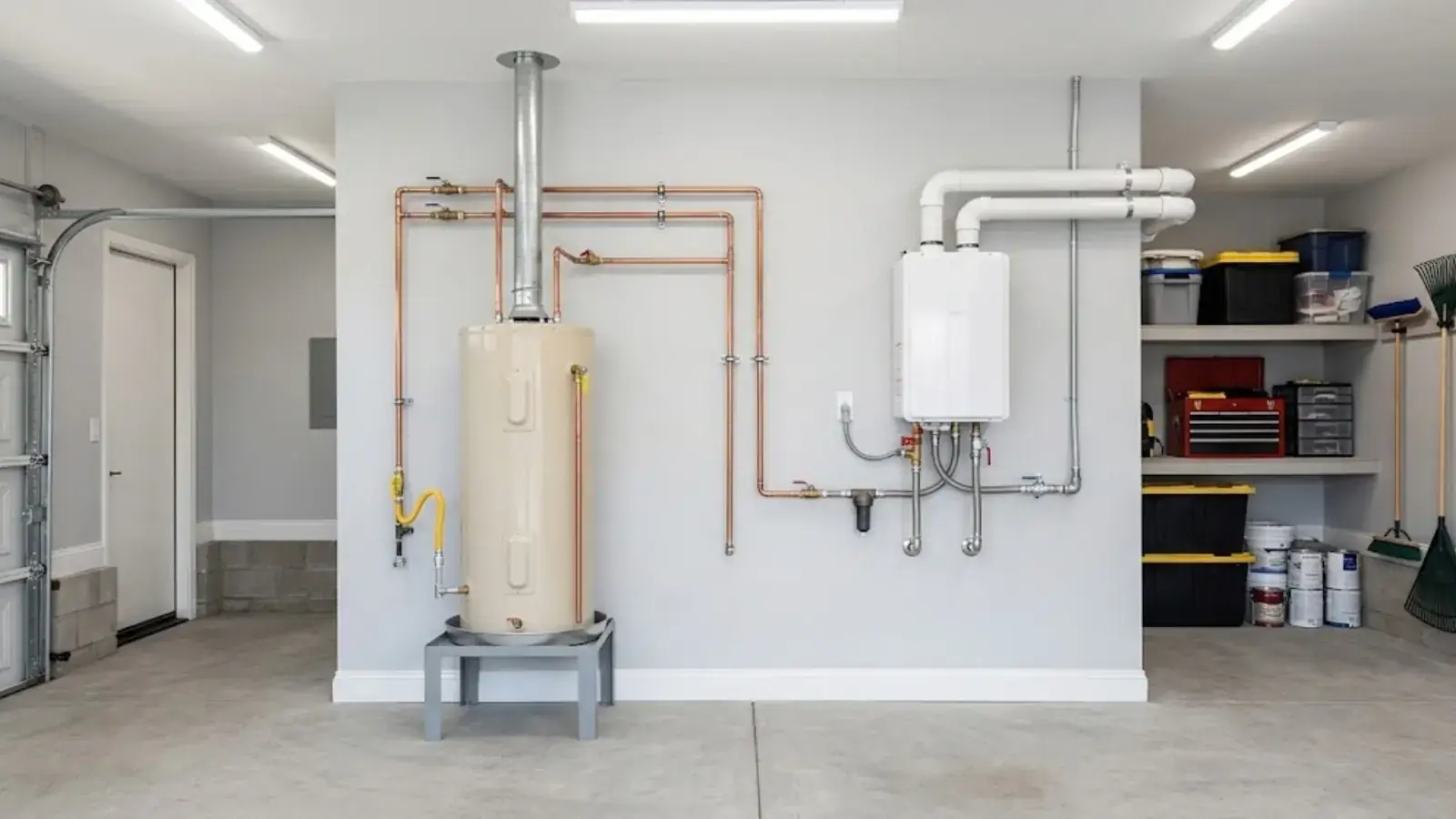
When a plumber sets a tank, the discharge pipe is part of a correct install, along with the shutoffs, the connectors, and the venting for gas units. If you are comparing quotes, see how a properly set tank and its relief line are laid out and ask how the relief line will be run.
If you already own a heater that drips, sweats or runs hot, the question is repair or replace. A repair visit for the heater can test the valve, the pressure and the thermostat, and tell you honestly whether a tank of that age is worth keeping.
Neighbors in Vine Grove and Elizabethtown have the same questions, and the same 24/7 line covers both.
Frequently asked questions
No. The pipe has to stay open so the valve can release pressure and heat. A cap turns a minor drip into a possible tank failure.
Find out why it drips. A plumber can test pressure, check the expansion tank and replace the valve if needed.
A material rated for hot water, commonly copper or CPVC, sized to match the valve outlet. Ordinary PVC is not designed for hot discharge.
Check the heater manual and ask the building department, because requirements can differ.
Heating water makes it expand. If the house has a check valve or pressure reducing valve and no working expansion tank, the pressure has nowhere to go and the relief valve opens a little.
A plumber can confirm this with a gauge. The fix is often an expansion tank, not a new valve.
Many manufacturers suggest lifting the test lever about once a year. Put a bucket under the pipe, lift it briefly, and let it snap back.
Follow your own manual. If the valve is stuck or leaks afterward, have it replaced.
Permit rules vary, so ask the city building department before you start. Replacing a water heater often involves them, and the discharge line is part of that work.
A licensed plumber can tell you what to ask.
You can, but Radcliff had ice storms in November 2018 and February 2021, so an exterior end can freeze and block the line. Slope it so water drains out, keep it open to air, and keep it visible.
For many Radcliff homes, a floor drain inside is the simpler choice. Ask the building department which termination they accept.