
Start with these three checks
No hot water usually means the heater is not heating, or hot water is not reaching the tap. First confirm the heater is on, then look for water on the floor, then decide whether yours is electric or gas. The label on the tank tells you which, and the model sticker also lists the power or gas input.
If you see water pooling around the base, or smell gas, skip the troubleshooting and read the safety section below. Everything else in this guide is safe to try with the covers closed and the power or gas off when you open anything.
Safety before you touch anything
A water heater combines hot water, electricity or gas, and pressure. Take these steps first.
- If you smell gas, leave the house and call 911 and your gas utility from outside. Do not flip switches or use a phone inside.
- For electric heaters, turn the breaker off before removing any access panel. Test that power is off before touching wires.
- If water is flowing from the discharge pipe or the tank, keep people back and shut off power or gas at the heater.
- Never hold down a pilot button for longer than the manual says, and never bypass a safety device.
- If anything feels beyond a simple reset, call the 24/7 line and tell the dispatcher whether the heater is gas or electric.
Electric heater checks
Electric tanks use two heating elements and two thermostats behind small access panels. Work through the easy items first.
Check the breaker
Look for a tripped breaker on the panel, flip it fully off, then on, and give the tank time to start heating.
Press the reset button
Turn the breaker off, remove the upper panel, and press the red high-limit reset button on the upper thermostat once.
Watch for a repeat trip
If the breaker or reset trips again, a failed element or a short is likely, so stop and call a plumber.
Compare hot water volume
Hot for a few minutes then cold usually points to a failed lower element. No hot water at all often points to the upper element or thermostat.
Leave testing to a licensed plumber
Checking elements and thermostats with a meter involves live voltage, so unless you are experienced, call.
Gas heater checks
Gas tanks need a flame to heat water. If the pilot is out or the burner will not light, there is no heat.
- Confirm the gas valve on the heater is set to ON or PILOT, not OFF.
- Look through the viewing window, if there is one, to see whether the pilot is lit.
- Follow the relighting instructions on the tank label exactly, including waiting time for gas to clear.
- If the pilot lights only while you hold the button and goes out when released, the thermocouple is a likely suspect.
- On newer units with an electronic igniter, listen for clicking and look for an error light or code on the control.
Do not keep trying to relight if you smell gas or if the flame is yellow, large or flickering. A rotten egg smell is your cue to leave and call the gas utility. A repeating failure to stay lit is a repair job, not a DIY job.
Symptoms, causes and who handles it
This decision table compares the most common patterns.
| What you notice | Likely cause | Next move |
|---|---|---|
| Nothing hot, electric, breaker tripped | Overload or short | Reset once, then call if it trips |
| Nothing hot, electric, breaker fine | Reset button or upper element | Try reset, then call |
| Lukewarm only | Lower element, thermostat or sediment | Call, a flush may help |
| Gas, pilot out | Draft, thermocouple or gas supply | Relight once, then call |
| Water on the floor | Tank or fitting leak | Shut off water and power, call |
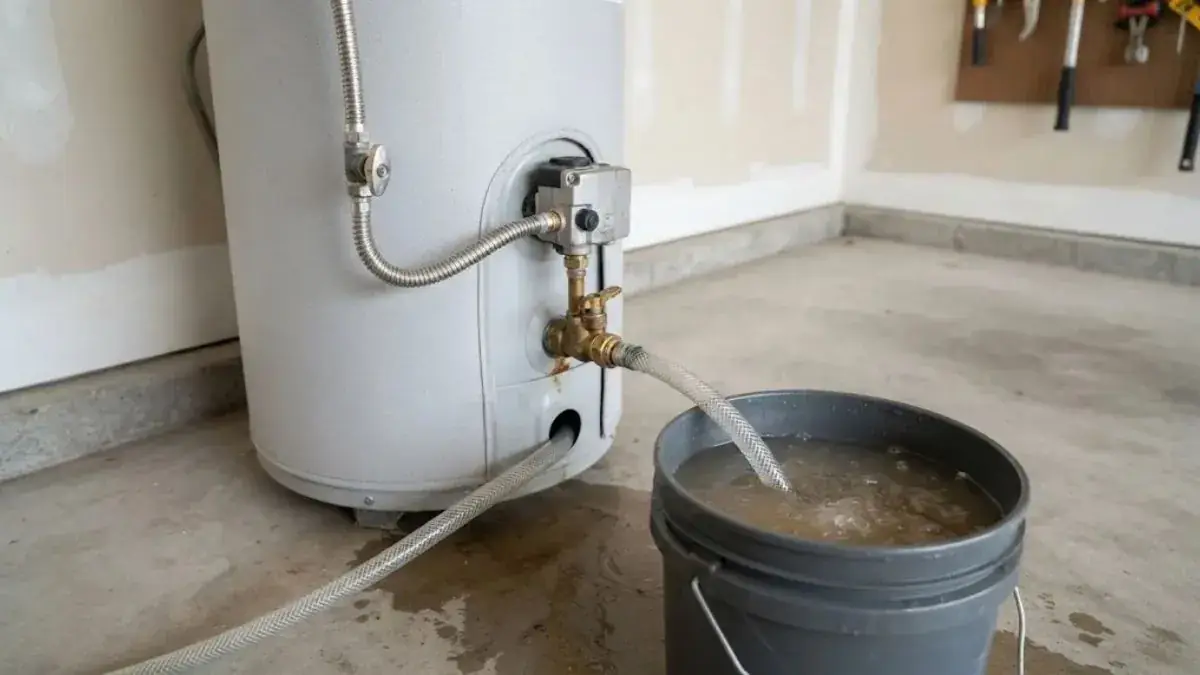
| Rumbling or popping noises | Sediment on the tank bottom | Plan a flush or service |
Radcliff ice storms and hard water
The 2023 Lincoln Trail hazard mitigation plan lists ice storms in the Hardin County zone in November 2018 and February 2021. Outages after storms like these are when many heaters need a restart.
Hardin County Water District No. 1 says on its FAQ that its water is hard because of exposure to rocks and rocky soils. It publishes no hardness figure in the 2025 water quality report, so test your tap and ask HCWD1 for its annual report. Hard water leaves sediment in tanks.
Source type: regional hazard plan (NWS event table) and utility FAQ (HCWD1).
Checking for a leak and the relief valve
A leaking tank can also cause no hot water. Look at the floor around the base, the pipe connections on top and the pipe from the T&P relief valve. Dripping from the valve line suggests pressure or temperature trouble, which needs a plumber and not a cap or plug.
A tank that leaks from the bottom seam is finished. Steel tanks corrode from inside, and once the shell seeps, repair is not possible. At that point the choice is a new heater. The water heater replacement page explains how to weigh a repair against a new tank.
Repair or replace
A heater that is more than a decade old, or one that has leaked, is a different decision from a new one with a failed part. These are the points that settle it.
Many tanks last roughly ten to fifteen years. A part replaced on an old tank may fail again soon after.
A bad fitting or valve can be replaced. A leak through the tank shell cannot be repaired.
If elements or thermocouples fail again and again, ask what is stressing them, such as sediment, voltage or venting.
A tank that is too small gives out of hot water fast and may be run harder than designed.
Parts, tank size, fuel type, venting and access shape the final price, and a plumber should quote it before work starts.
Insurance note: a sudden burst or accidental discharge may be covered by a homeowner policy, while wear is not. Ask your insurer, and photograph any damage.
When it is time to call
Call a licensed plumber if the breaker trips twice, the pilot will not stay lit, water is leaking, the tank is loud, or the water is rusty. A water heater repair visit can test power, gas, the valve and the thermostat. Cold showers in winter are miserable, so ask about a same-day appointment when available.
Who we serve
The same 24/7 line covers Vine Grove and Elizabethtown, so someone nearby can call the same number. Have your heater type, the age on the label and what you already tried ready for the dispatcher.
Frequently asked questions
On electric units, a tripped breaker or reset button is the first suspect. On gas units, a pilot that went out is the usual cause.
If neither applies, a failed element, thermostat or thermocouple is likely.
A full tank takes a while to heat, often an hour or more for electric and somewhat less for gas, depending on size. Check again before assuming the reset failed.
If the breaker or reset trips again, stop and call.
On many heaters, yes, if you follow the label steps and there is no gas smell. Wait the stated time before lighting.
If it will not stay lit, or you smell gas, leave it alone and call a plumber or the gas utility.
A failed lower element, a low thermostat setting or sediment on the tank bottom are common causes. Mixing valves and crossed lines can also play a part.
A plumber can test each one.
Hard water leaves mineral sediment that insulates elements and burners from the water. That can mean noise, less hot water and shorter part life.
Flushing the tank and replacing a worn anode rod can help in some cases.
Yes. After an ice storm or outage, electric heaters may need a breaker or reset button checked, and gas units with electronic ignition may need to relight.
Radcliff had ice storms in November 2018 and February 2021, so winter restarts are a real situation here.