
Start with where the water appears
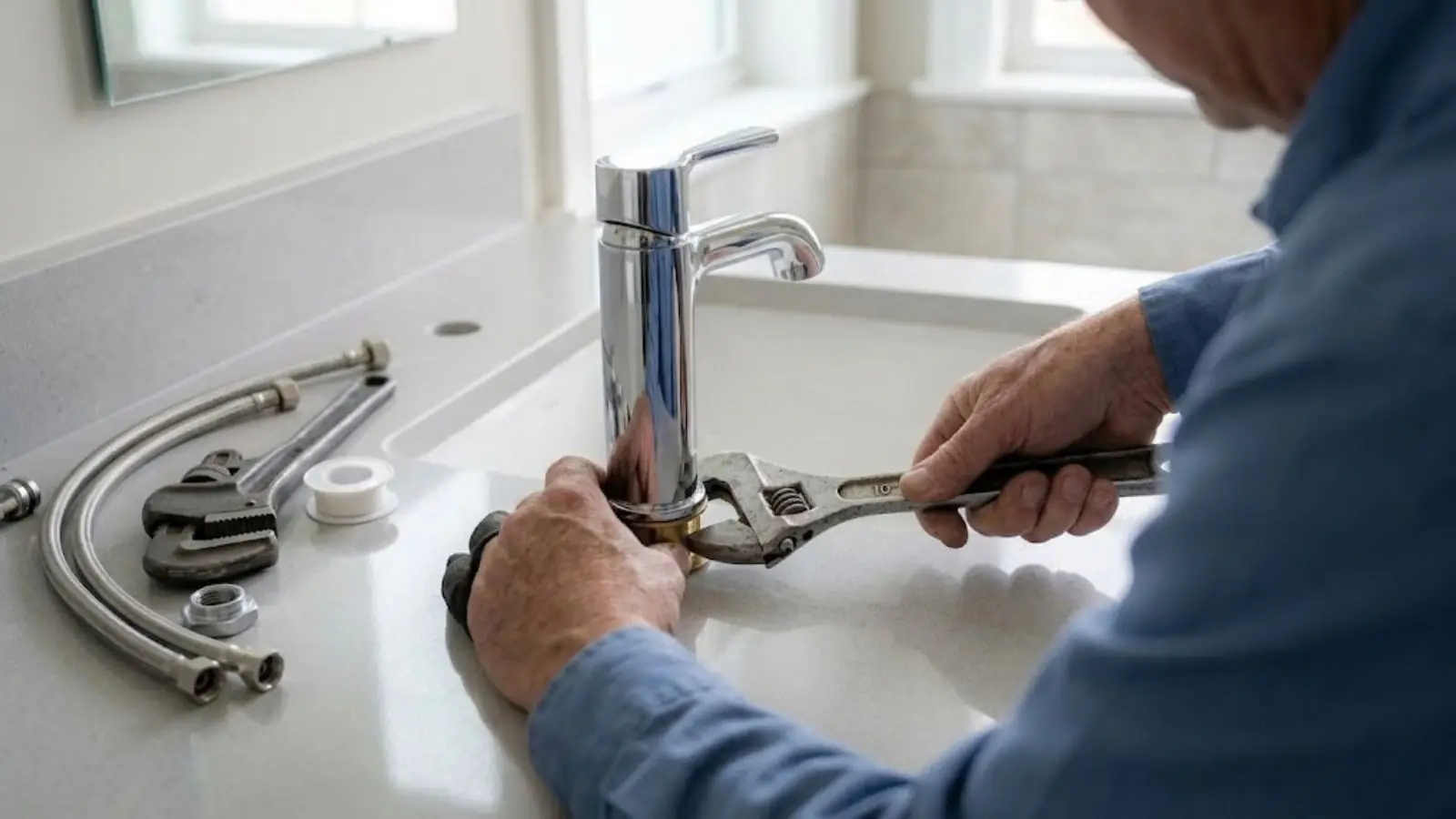
A hose faucet that drips from the spout usually has a worn seat washer. One that leaks around the handle usually has worn packing under the packing nut. Both repairs are small and need only an adjustable wrench, a screwdriver and a repair kit that matches your faucet.
A frost-free sillcock, the long type with the handle sticking out of the wall, works on the same idea but hides its washer at the far end of a long stem. A spigot that leaks inside the wall, or one whose pipe turns when you twist the handle, needs a licensed plumber rather than a weekend project.
Before touching anything, look at the faucet in daylight with the water running and a hose attached, then again with it off. Note whether the drip is steady, only under pressure, or only at the handle. That one observation saves a trip to the hardware store.
Match the symptom to the likely cause
Most outdoor spigot problems fall into a handful of patterns. Use this table to decide how far you want to go yourself.
| What you see | Likely cause | DIY or call |
|---|---|---|
| Drip from the spout when off | Worn seat washer or damaged seat | DIY on a standard bib |
| Water around the handle when on | Worn packing or loose packing nut | DIY, often a quarter turn |
| Water from the vacuum breaker cap | Worn breaker disc or a hose left attached | DIY swap of the breaker |
| Spray or drip from the pipe at the wall | Cracked body or freeze damage | Call a licensed plumber |
| Wet drywall or floor inside, below the spigot | Leak in the stem or the pipe behind the wall | Call a licensed plumber |
| No flow, handle spins freely | Broken stem or stripped threads | DIY stem swap, or call |
If the wall or ceiling inside the house is stained below the spigot, treat that as a leak behind the wall until proven otherwise.
Shut off the water and set up
Most homes have a shutoff valve for the outdoor line, often in a basement, crawlspace or utility room close to the spigot. If you cannot find one, you will need to close the main valve instead.
Close the supply
Turn the interior shutoff clockwise until it stops, or close the main valve if the spigot has no separate one.
Drain the line
Open the hose faucet and let the last water run out, then leave it open while you work.
Disconnect everything
Remove hoses, splitters and timers, because their weight can stress the pipe while you wrench on the body.
Lay out parts
Put screws and washers on a towel in the order they come off, and take the old washer with you to match it.
What to do if water is spraying inside the wall
If a pipe behind the outdoor spigot is leaking into the house, close the nearest interior shutoff or the main valve right away. Do not open the wall yourself. Keep water away from outlets, and take photographs of any wet drywall or flooring for your insurer before cleanup. A licensed plumber can find the break and tell you what needs opening.
Radcliff winters and water bills
The Hardin County zone logged ice storms in November 2018 and February 2021, according to the regional hazard mitigation plan. Two freezing events in a few years is a good reason to disconnect hoses and drain outdoor faucets each autumn, not after the first cold forecast.
Hardin County Water District No. 1 says on its FAQ that a dripping faucet can waste up to 5,000 gallons a month and a steady stream up to 21,000 gallons a month. A spigot dripping behind a shrub is easy to ignore, so check it when you read your bill.
Source type: HCWD1 utility FAQ and 2023 Lincoln Trail Hazard Mitigation Plan.
Stop a leak at the handle
Water seeping around the stem when the faucet is open is a packing problem. With the supply on, try tightening the packing nut, the hex nut right behind the handle, by a quarter turn. Go slowly, because overtightening makes the handle hard to turn and can crack an old brass nut.
If tightening does nothing, shut off the water, remove the handle screw and handle, and unscrew the packing nut. Wrap the stem with a few turns of graphite packing string, or replace the rubber packing washer if your model uses one, then reassemble. A kit sold for your brand is the cleanest route.
A leak that comes back within days usually means the stem itself is worn or pitted. Replacing the whole stem is often easier than fighting a bad one.
Replace the washer on a standard bib
With the water off, back the stem out of the faucet body using a wrench on the packing nut or bonnet. The seat washer sits in a small cup at the bottom of the stem, held by a single brass screw. Pry out the old rubber, which is usually flattened or cracked, and set in an exact match.
Look at the brass seat inside the body. If it feels rough or grooved under a fingertip, the new washer will wear out quickly. A seat dressing tool can smooth it, or the faucet may be better replaced.
Thread the stem back in, snug the packing nut, turn the water on slowly with the faucet open, then close it and watch the spout for several minutes. A dry spout means the repair held.
Frost-free sillcocks and why they fail
A frost-free sillcock carries its valve seat deep inside the wall, so the part exposed to cold air holds no standing water. The pipe is pitched slightly downward toward the outside so the water drains out when you shut the valve. That slope is what protects it.
It only works when the hose is off. A hose left attached traps water behind the spout, and that water can freeze and split the pipe inside the wall. The split often stays hidden until spring, when the faucet is turned back on and water sprays into the wall cavity.
To repair one, you remove the entire stem, which can be a foot or more long, and swap the washer at the tip. Replacing the full unit means cutting into soldered, threaded or push-fit pipe, and that is where a licensed plumber earns the call.
The vacuum breaker, explained
Many newer hose faucets carry a small cap-shaped fitting at the spout called a vacuum breaker. It stops dirty water in a hose from being pulled back into your drinking water. A little water leaking from its side holes when the faucet runs can be normal. Constant dripping with the faucet off means the internal disc is worn, and the fitting usually unscrews and replaces without tools beyond pliers.
Prepare the spigot before a hard freeze
A few minutes in autumn prevents a split pipe in January.
- Disconnect every hose, splitter and timer and drain the hose before storing it.
- Close the interior shutoff for the outdoor line if you have one, then open the outside faucet to drain it.
- Leave the outside faucet open so any leftover water has room to expand.
- On a standard bib with no frost-free design, fit an insulated cover over the spigot.
- Check for a drip from a frost-free sillcock on the first warm day, and look for damp spots inside.
When to hand it to a licensed plumber
Call for faucet repair when the spigot is loose in the wall, the pipe turns with the handle, the stem will not come out, or the leak is on the pipe rather than the faucet. Those fixes involve soldering, threaded joints or opening drywall, and a mistake can flood a wall.
Persistent wetness inside the house under the spigot also deserves a professional look. A technician can pressure test the line and trace the source with leak detection tools instead of guessing and opening the wall in the wrong place.
We dispatch plumbers to Radcliff, and the same line covers Vine Grove and Elizabethtown. If water is spraying and you cannot find any valve to stop it, close the main water valve and call the 24/7 line.
Frequently asked questions
Water pressure pushes past a tired washer or a worn hose-end gasket once the hose fills. Replace the cheap rubber hose washer first, since it costs almost nothing and takes seconds. If the drip comes from the spigot and not the hose connection, the seat washer inside the faucet is the next suspect.
Tape wraps the male threads on a pipe joint, so it helps with a leak between the spigot and the pipe or at a vacuum breaker thread. It does nothing for a leak from the spout or handle, which comes from worn washers or packing. Match the repair to where the water appears.
A slow drip outside is mostly a waste of water. A leak at the base or inside the wall can soak insulation, rot sheathing and feed mold, so it deserves quicker attention. Look inside for damp drywall, stains or a musty smell near the spigot.
A frost-free sillcock has a long body that extends back into the house, often eight to twelve inches or more, and the outside end angles slightly down. A standard bib is short and flat. If you can see the pipe in a basement or crawlspace, you can trace it and confirm.
Replace the washer or stem when the body is sound and the threads are clean. Replace the whole faucet when the body is cracked, the seat is badly worn, parts are unavailable, or the faucet has frozen before. A new unit is also a good time to switch to a frost-free design.
The Hardin zone had ice storms in November 2018 and February 2021, so treat freezing weather as a recurring risk. Disconnect and drain hoses, shut the interior valve for the outdoor line if you have one, and open the outside faucet. If your faucet is the older non-frost-free style, cover it.