
Start with what the water does
How the sink behaves tells you where to look. Water that sits in the bowl and goes down in a lazy swirl points to the stopper or the trap. Water that gurgles, or drains and then burps air, points to the vent. Water that backs up in the sink when another fixture drains points to a line shared with that fixture.
Do not reach for a chemical cleaner yet. It can sit in a standing sink, damage finishes and splash when you work on the trap. A few minutes of looking is cheaper and safer.
Check the pop-up stopper and its linkage
Most bathroom sinks use a pop-up stopper worked by a lift rod behind the faucet. Hair and soap collect on it, and the linkage under the sink can slip.
Look at the stopper position
Work the lift rod up and down and watch whether the plug actually rises fully in the bowl.
Look under the sink
Find the horizontal pivot rod where it enters the drain tailpiece and check the strap or clevis that holds it to the lift rod.
Remove and clean the stopper
Many lift out when you loosen the pivot nut or unclip the strap, and hair wraps around the bottom.
Reassemble and test
Make sure the stopper opens fully, hand-tighten the nut and run water.
A stopper that opens only partway is one of the most common reasons a sink drains slowly with no real clog.
The overflow channel and the trap
The hole near the top of the bowl is the overflow. It connects to the drain behind the bowl, and gunk collects there. A smell that comes from the overflow hole is a good clue.
Under the sink, the curved trap holds a plug of water to block sewer gases. It also catches hair, soap scum and anything dropped down. Place a bucket underneath, loosen the slip nuts by hand or with pliers, and clear the trap. Inspect the washers when you reassemble and do not overtighten plastic nuts.
If the sink has a leak at the same time, a plumber who handles sink and faucet fixes can check the supplies, tailpiece and fittings in one visit.
Symptoms and likely causes
Match your sink's behavior to the most probable cause.
| What you see | Most likely cause | Try first |
|---|---|---|
| Slow drain, bowl empties slowly | Hair on stopper or in tailpiece | Clean the stopper |
| Stopper will not seal or will not open | Loose or slipped linkage | Adjust pivot rod and clevis |
| Drain gurgles or burps air | Blocked or restricted vent | Check other fixtures, call a plumber |
| Water backs up in the sink when a tub or toilet is used | Shared line partly blocked | Test other fixtures, call a plumber |
| Smell from sink, drains fine | Overflow or trap buildup | Clean overflow channel and trap |
| Every fixture in bathroom drains slowly | Partial clog deeper in the branch line | Professional cleaning |
| Mineral crust in the trap | Scale from hard water | Clean the trap and descale |
When the vent is the problem
Every drain needs air behind the water so it can flow. A vent pipe through the roof supplies that air. If a nest, leaves or ice partly blocks it, water drains slowly and the trap can gurgle or lose its seal. You cannot fix this from inside the bathroom, and climbing onto a roof is a poor DIY idea. If other fixtures gurgle too, it points toward the vent or the main drain.
Radcliff sewer service and mineral scale
Hardin County Water District No. 1 operates the sewer systems in Radcliff and Fort Knox, so a problem past your own property line belongs to the district. A clog inside your house and its branch lines is usually yours to fix.
The district also describes its water as hard from rocks and rocky soils, without publishing a figure. Mineral scale in a trap is a plausible contributor to slow drains here, though a stopper full of hair is still the more common cause. Test your tap and ask HCWD1 for its annual water quality report if you want to know what is in your water.
Source type: HCWD1 utility FAQ.
A partial clog deeper in the line
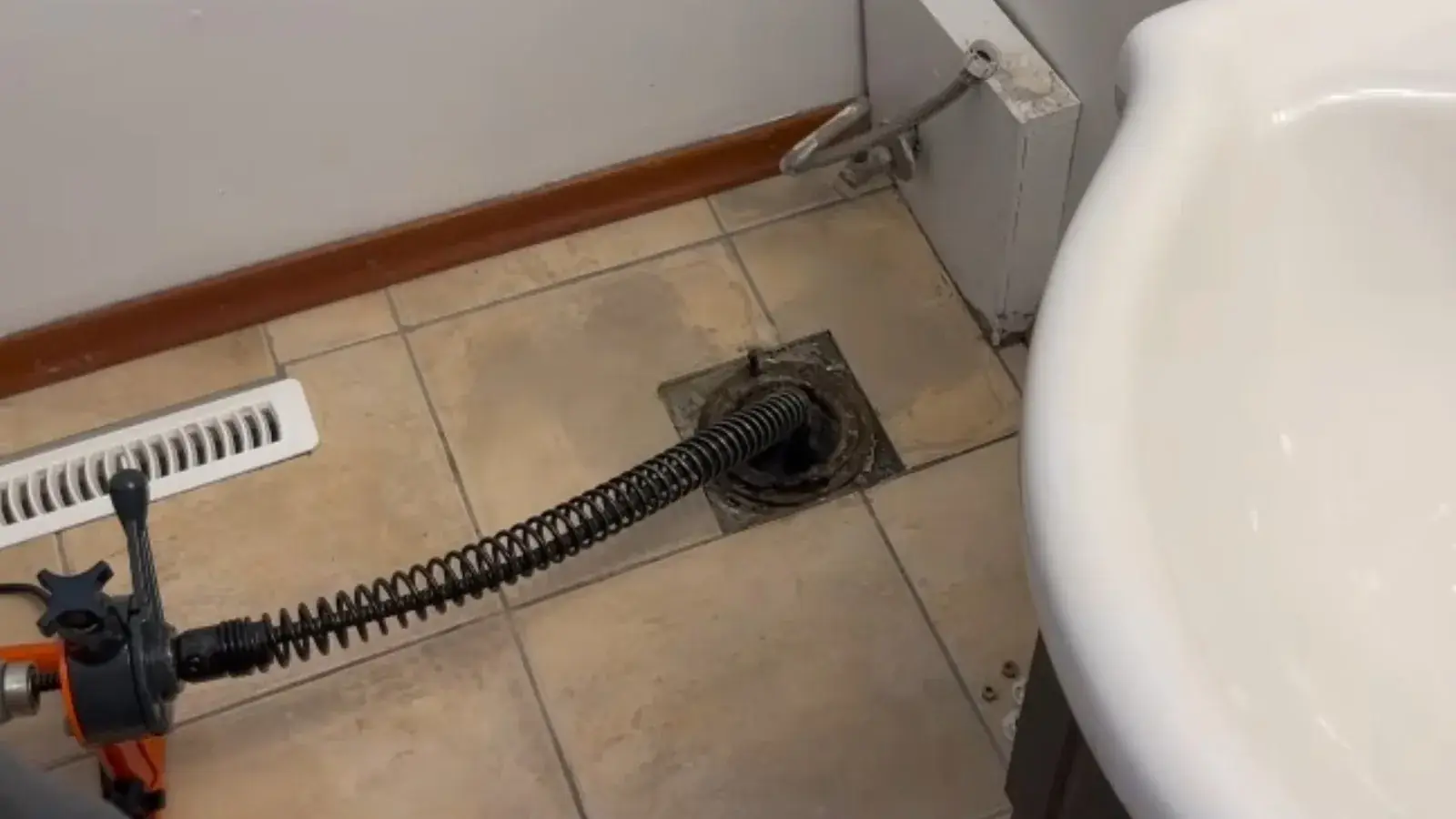
If the stopper, overflow and trap are clean and the sink is still slow, the blockage is probably farther down the branch line. Soap, hair and scale narrow the pipe over months, so flow gets worse gradually before it stops. A small hand auger can reach a short distance, but pushing it hard can scratch or damage pipe and fixtures.
A plumber who cleans the branch line will use an auger or a hydro-jet nozzle sized for the pipe, and if the problem keeps returning, a small camera shows what the pipe looks like inside. Ask for that rather than repeating the same snake pass.
What to avoid
These common moves make things worse.
- Mixing drain cleaners, which can release dangerous fumes.
- Pouring a caustic cleaner into a sink that is already full, since it will sit on your skin and fixtures when you open the trap.
- Forcing a wire hanger or stiff rod down the drain, which can scratch the pipe or wedge debris tighter.
- Overtightening plastic slip nuts, which can crack them and cause a leak.
- Ignoring a gurgle that appears in other fixtures, since that often means a bigger problem than one sink.
Before you call
A few facts help the plumber arrive with the right tools.
- Note which fixtures are slow and which are fine.
- Remember whether the sink is on city sewer or a septic tank and tell the dispatcher.
- Keep water off in any fixture that backs up into the sink.
- Clear the cabinet under the sink so the trap is reachable.
- If sewage smells or fixtures back up together, call the 24/7 line right away.
Frequently asked questions
The trap, the overflow channel or the branch line farther down may still be partly blocked. Slow flow that improves for a day and returns suggests a partial clog deeper in the pipe.
A plumber can run a small camera to see it directly.
Yes. Without air behind the water, drainage slows and the trap may gurgle. If several fixtures gurgle or drain badly together, the vent or main drain is more likely than a single sink clog.
Roof work is not a homeowner task, so call a plumber.
It is not our first choice. Chemicals do little against a partial clog made of hair and scale, can harm pipes and finishes, and are hazardous if you later have to open the trap. Never mix products.
Mechanical cleaning is more reliable.
That means the sink and shower share a branch line and something is partly blocking it downstream. The problem is not the sink itself. This is a case for professional cleaning of the branch.
Stop using the affected fixtures until it is cleared.
HCWD1 operates the sewer systems in Radcliff. Issues in the district's mains are its concern, while clogs inside your house and its branch lines are normally yours to fix. If several homes on your street back up together, call HCWD1.
Tell the dispatcher whether you are on city sewer or a septic tank so the right plumber is sent.
Yes. See our page for an emergency plumber in Vine Grove and the one for an emergency plumber in Elizabethtown. Same-day appointments are offered when available.